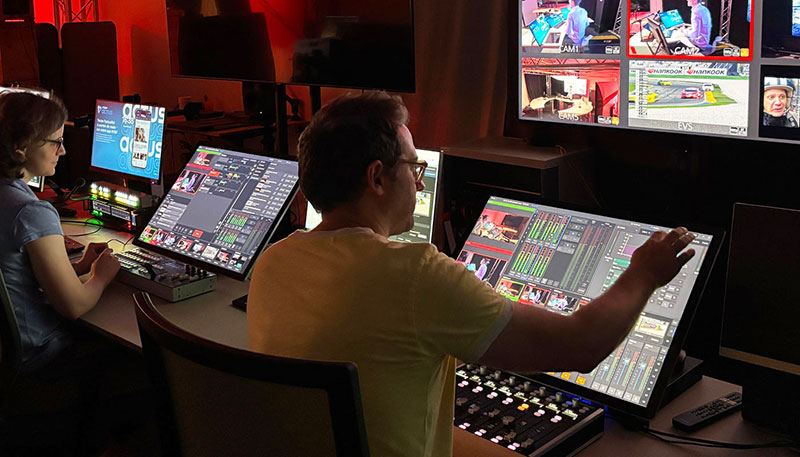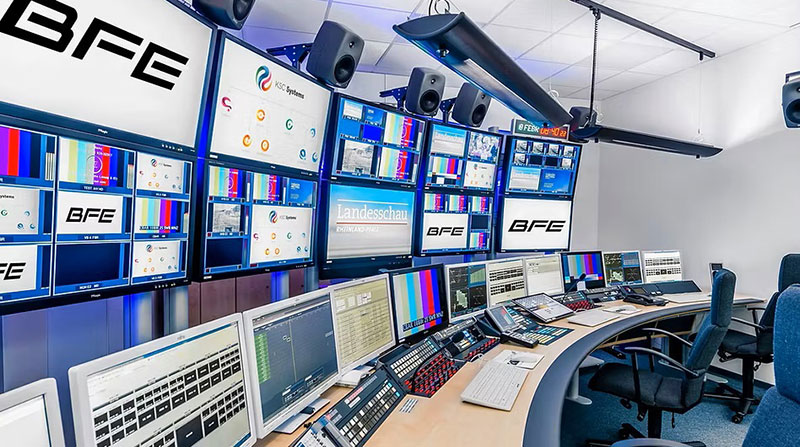


Asharq expanded its Riyadh operations to bring news, cultural and Thmanyah sports services together on a resilient on-premises Pebble platform. ALSO, Pebble shares future plans at IBC.
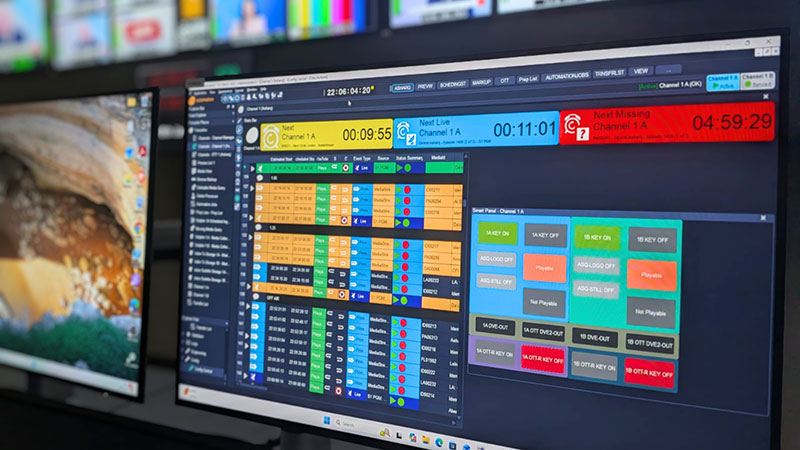
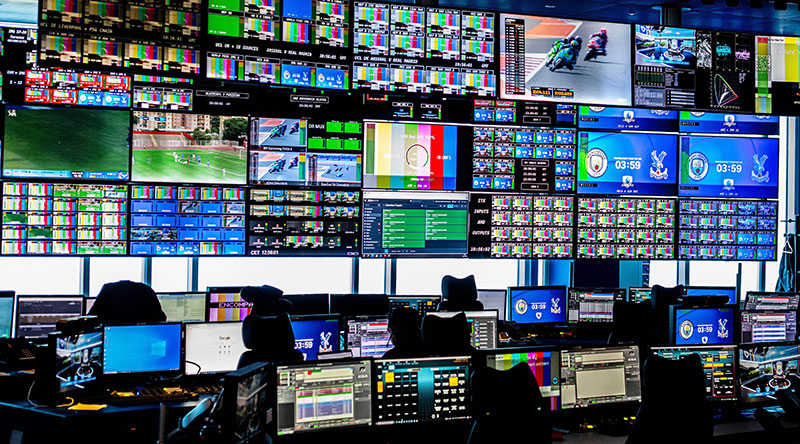
Asharq, part of the Saudi Research and Media Group (SRMG), broadcasts programming across the Arab region. The organisation has recently moved all of its channels from Dubai to KAFD in Riyadh, meanwhile taking the opportunity to add the high-profile Asharq Culture channel, and upgrade the playout infrastructure for its Thmanyah Saudi football channels 1-3, in order to support live events.
Bloomberg Asharq was the company’s first service, launched in 2020 at its first IP ST 2110-based playout centre built in Dubai. Subsequently, more services were added. As part of the recent expansion, Asharq has now consolidated its playout operations in the King Abdullah Financial District in Riyadh, Saudi Arabia. The Riyadh facility accommodates Bloomberg Asharq News, Asharq Discovery, Asharq Documentary and the recently launched Asharq Culture Channel.
The Saudi football connection came last year when Thmanyah, which is also part of the SRMG group and a sister company to Asharq, won the rights to the Saudi Premier League and asked Asharq to supply and maintain the facilities for its sports channels.
Central Control
Over the last few years as the company launched these services and expanded its footprint, Asharq UAE has been using Pebble Automation and Integrated Channel. The systems’ competitive performance led to the decision to use the Pebble platform for Thmanyah’s channels 1-3 as well. The three sports services, designed to support the demands of live events, went on air on 13 August 2026.
“Thmanyah taking over the rights to Saudi Premier League football called for even more precise performance from our central control facilities,” said Omran Abdullah, VP Engineering IT and Technology SRMG News at Asharq. “We needed complete operational control to be able to react to the unpredictable nature of sport, together with instant response from the system.
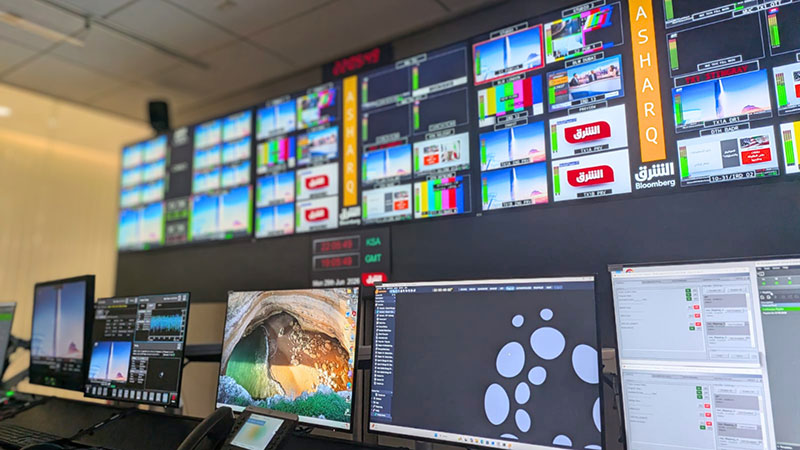
“Pebble has been a strong partner since 2019, keeping our systems up to date with modern developments and delivering excellent performance. That experience gave us confidence as we moved the Asharq operation to Riyadh and added the three Thmanyah sports channels to the platform.”
Software Transmission Chain
Samir Isbaih, VP Sales – Middle East and APAC at Pebble said, “Asharq has deployed Pebble’s enterprise solution on-premises at its Riyadh facility. Particularly for premium live sports, the straightforward, responsive and resilient nature of our proven platform holds up against the dynamic and complex requirements of sports channels.
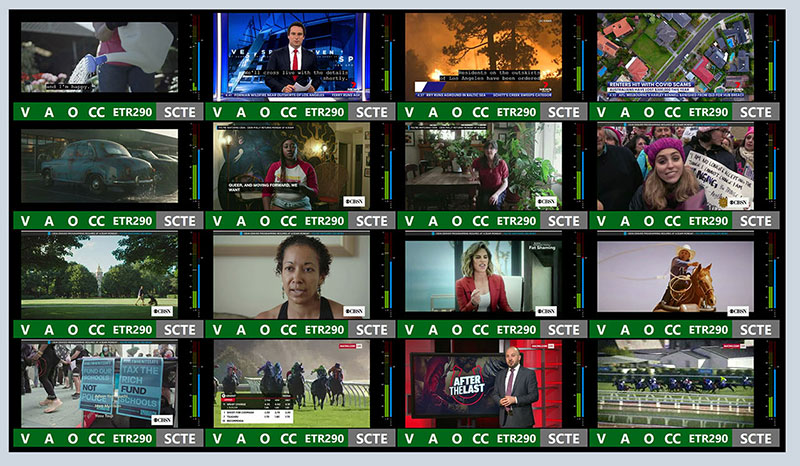
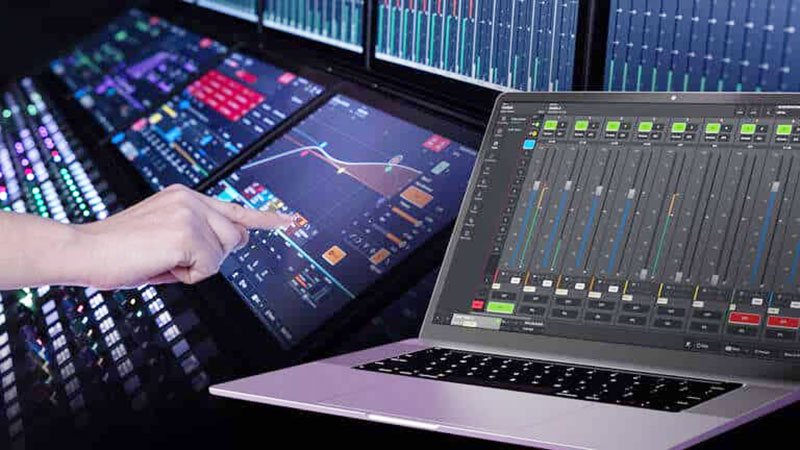
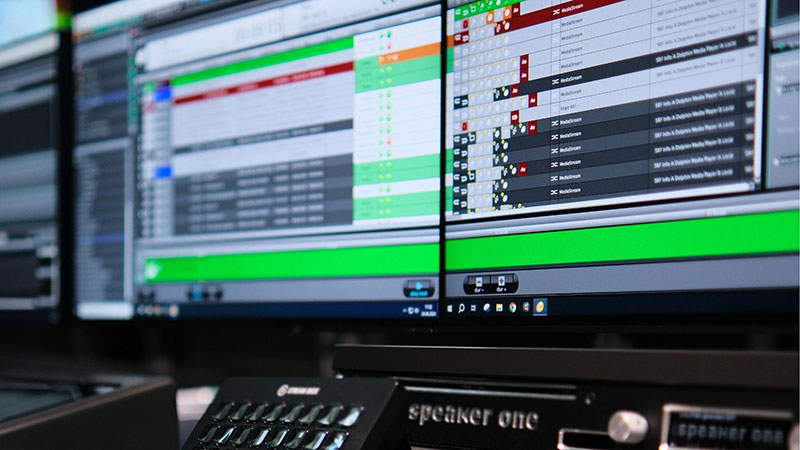
“Key capabilities include originating digital and terrestrial outputs from the same playlist, with content and ad replacement. More advanced functionality includes SCTE, DVB subtitles, XAVC support, HDR and SDR. As cost-effective CAPEX processing, it keeps video encoding delay to a minimum throughout the Pebble software transmission chain. It includes native ST 2110 I/O, with support for SDI and NDI on the same server as required, and N+N+N redundancy.”
Facing the Future at Pebble
When Digital Media World spoke to Pebble at IBC2026 this month, we met CTO Miroslav Jeras. He made it clear that, alongside staying relevant and involved with initiatives shaping the standards and approaches supporting the media infrastructure of the future, Pebble wants to ensure its product development meets the real-world expectations of broadcasters and media organisations – including those of their existing customers like Asharq.
Such expectations include the agility to support new business models, operational methods and content delivery workflows. In turn, they will lead to the use of more flexible software-defined architectures, and to supporting users’ strategic choices regarding on-premises, cloud or hybrid environments.
Examples are Pebble's ongoing work to evolve Pebble Automation towards a cloud-native architecture. The company has spent the last two years making it possible to run Pebble Automation on Linux and use containerisation to keep the process simpler for users. Also, as their team continues to develop Pebble Integrated Channel and Pebble Remote, security and long term stability will be priorities.
Continuous Development, Protecting Investment
After more than 25 years of experience helping broadcasters adapt to change, and understanding their current and future business goals, Pebble’s own goal is to continuously develop a platform that supports them over time while protecting investments they have already made in hardware, workflows and human resources.
That approach means that Pebble's key plans for virtualisation and cloud-based playout, will also involve a parallel development path working with technology, standards and operational models including Dynamic Media Facility (DMF), cloud infrastructure and AI-assisted operations. Pebble actively engages with industry bodies including the DPP and JT-DMF, the Joint EBU/AMWA Task Force on Dynamic Media Facilities.
Similar principles apply to AI, respecting user each user’s actual requirements, expectations and existing investments. Used with care, AI can be transformative, but in playout, frame-accurate execution must remain deterministic. Therefore, Pebble’s intention is that AI work around their core engine, not inside it. Meanwhile they are exploring how AI can support monitoring, operational workflows and decision-making.
Pebble is certain that the future of the industry will demand even greater flexibility and adaptability through operational intelligence, an approach the company has always followed. Today they are investing in the technologies and architectures that will deliver those factors, while continuing to focus on reliability, security and operational confidence for broadcasters. www.pebble.tv