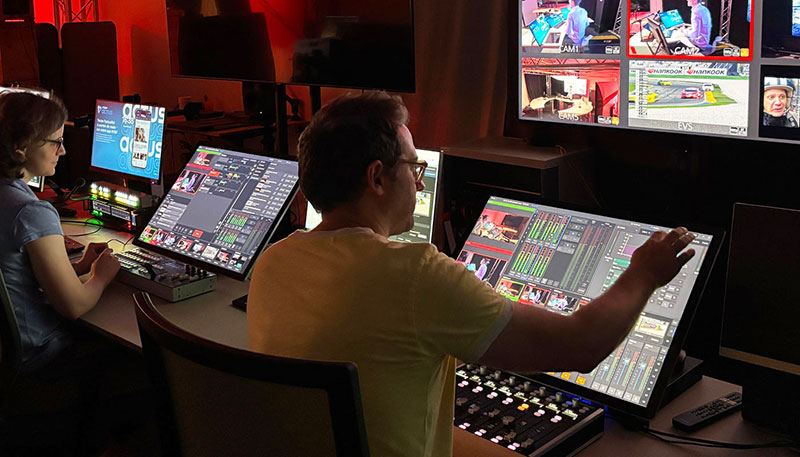


OB specialist Cloudbass expanded its fleet to accommodate remote production for a UK sports broadcaster, choosing Calrec’s compact IP-native Argo M to anchor the audio ecosystem.
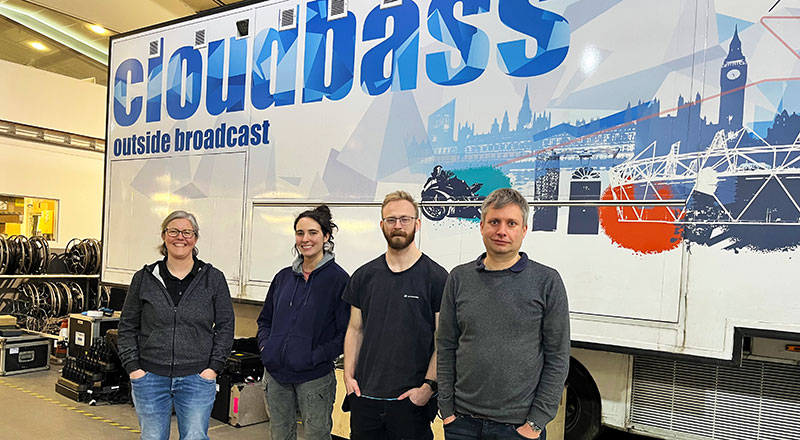
Cloudbass are outside broadcast specialists based in Derbyshire, England, that operate a large fleet of full-scale OB vehicles carrying up to 24 cameras each. After recently making a contractual agreement to supply a major UK sports broadcaster with OB services for 104 football matches per season over the next four years, the company completed preparation of two new OB trucks, purpose-built for remote production by dB Broadcast.
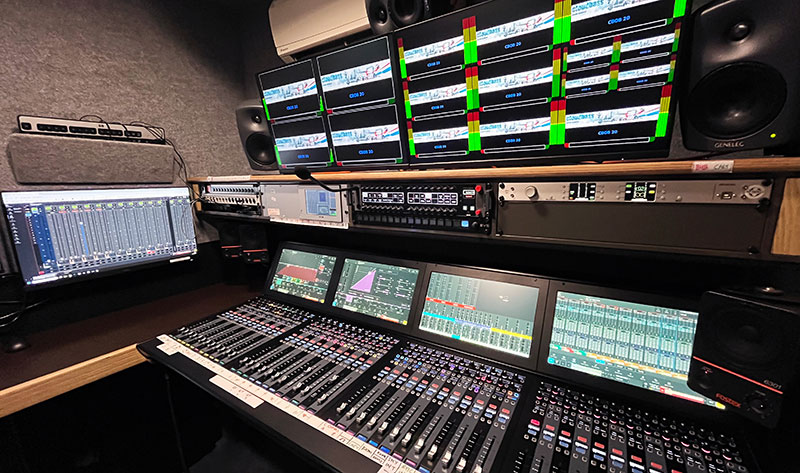
Aiming for modern, robust production operation, Cloudbass designed the trucks around SMPTE 2110 standards. OB20 is a hybrid unit featuring a 48-fader Calrec Argo M, a compact IP-native audio console built with dual Calrec ImPulse1 cores and an RP1 remote production audio processing engine. OB21 houses a 24-fader Argo M and a second RP1.
IP Integration of the Argo M
Argo M was built as a straightforward, medium-sized console with integrated DSP processing, built-in analogue and digital audio I/O and SMPTE 2110 connectivity. However, as in this case, Argo M can also connect to an existing ImPulse core, Calrec’s audio processing and routing engine with native AES67/SMPTE 2110 connectivity and customisable support for NMOS discovery and connection management. The cost-effective ImPulse1 version used here is housed in a 1U enclosure, made for smaller setups like an OB truck.
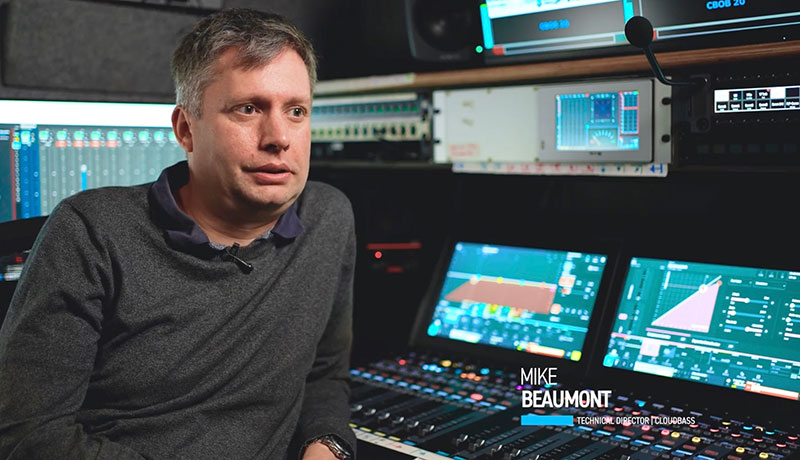
Mike Beaumont, Technical Director at Cloudbass said, "The integration of the Calrec Argo M consoles into the IP layer was fairly straightforward. The ability to run an almost unlimited number of streams in and out has made the design process really simple."
From Local DSP to Programme Mix
Cloudbass Sound Guarantee Nat Jones became involved with the project after the design phase was completed, focusing mainly on the installation and configuration of the new Calrec desks."In OB20 and OB21, we gather all incoming field sources and use the Argo M consoles to ensure they are clean and are arriving at the right levels," he said. "We then pass them on to the broadcaster over AES67 streams. We also send them to the RP1 in the truck to provide local ear mixes."
The RP1 works by making local DSP, low latency and direct remote control available locally on-site, in effect allowing engineers to work with their chosen Calrec console anywhere in the world – but without leaving the studio or shifting the hardware. Power, router, control processor and DSP functions are all self-contained within the RP1’s compact 2U package that goes on-site. This means monitor mixes and IFBs can be generated without latency, and an operator in a remote studio can exert direct control over channel functions such as mic gains, aux send/monitor mix levels and fader levels.
With all DSP for monitor mixes taken care of, the studio transmission console can be devoted solely to the main programme mix. RP1 includes a backhaul connectivity mechanism to embed audio into existing backhaul setups, such as SDI or MADI.
Outside Broadcast – a Changing Industry
Nat believes that the main advantage of transitioning to IP is being able to use shared infrastructure with the vision team. "It means we can put a single pair of switches out in the field and it doesn't matter if we plug in a Hydra networking system to connect the consoles, some vision equipment or a camera, it all works over the same backbone."
Cloudbass has been supporting broadcasters with OB services for more than 25 years, covering a range of events including sport, music festivals and state occasions. The company has seen many iterations of technology during this time.
Mike Beaumont, Cloudbass Technical Director
"The outside broadcast industry is changing quite rapidly," said Mike. "There's a lot of new technology out there, some of it works well for remote production, some of it doesn't. Much of it is software-defined, and the way companies approach building OBs is changing. But the one thing that isn't changing is the need for a physical surface. Yes, you can work on touchscreens, but it doesn't have the same immediacy as a real fader."
From Venue to Venue
The trucks are in regular use moving from job-to-job in fairly quick succession. "Last season, OB21 in particular covered the 3pm Saturday match and then bounced to a different venue for the 2pm Sunday game," Mike said. "It doesn't leave much time for setup but having the Hydra boxes outside for networking the consoles accelerates that."
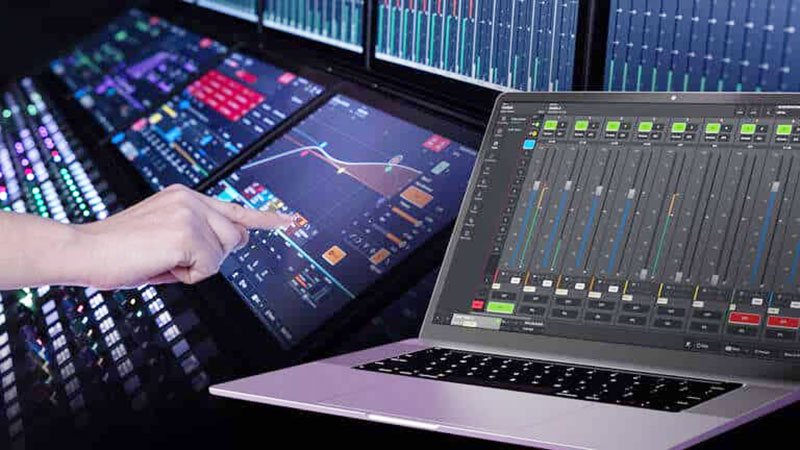
For Nat, the new Argo console’s differentiating feature is the Calrec Assist UI. “We can control the desk from another computer, which means that we don't have to interrupt the supervisors while they're mixing to make small changes to the routing or lineup. Moving to the Argo has been a little bit of a learning curve but after getting used to it, it's almost become second nature." calrec.com