

Nevion’s new audio compression and HEVC improvements for their Virtuoso media processing media node help balance bandwidth usage and latency, without compromising quality.

Nevion has released a new upgrade to its Virtuoso software-defined media processing node that further optimises media transport by allowing broadcasters to control bandwidth and latency more precisely when using HEVC/H.265 compression.
Virtuoso is a key component of Sony's Networked Live, a system of products and services that combines hybrid on-premises and cloud processing with network connectivity to support live production. Nevion Virtuoso is now widely used for live contribution, remote production, IP facilities, outside broadcast and cloud connectivity. Its software-defined architecture enables media transport, processing and monitoring functions to be deployed and reconfigured as users’ needs evolve.
At the same time, Nevion is continuing to optimise the latency performance of Virtuoso HEVC. The platform already achieves favourable encode-decode latency, and this new optimisation mode gives the option to further reduce latency by approximately 40%, according to Nevion. Development is underway toward a true Ultra Low Latency solution, taking advantage of specialised capabilities in the Sony chipset Virtuoso uses. In all modes, the codec is able to deliver original-quality images.
The new release introduces audio compression alongside Virtuoso's HEVC capability, which helps to helps reduce overall transport bandwidth still further. This is particularly valuable in highly compressed HEVC workflows, where multiple channels of uncompressed audio can represent a significant share of the total payload. By compressing audio as well as video, Virtuoso enables more efficient use of constrained network capacity while maintaining the quality required for professional live production.
In line with Networked Live's aim to promote interoperability with third-party equipment, the Virtuoso audio compression is based on the AAC-LC audio codec, an open standard that is also used widely in applications ranging from streaming services to digital broadcasts and mobile apps.
AAC compresses audio by eliminating sounds that are either beyond human hearing or masked by louder sounds, a method called perceptual audio coding. It supports sampling rates up to 96 kHz and multiple channel configurations from mono to, for example, 48-channel surround sound, which makes it very flexible. These factors allow users to achieve higher audio quality at lower bitrates, and help keep latency low enough for real-time applications.
Steve Hard, VP of Product Management for Virtuoso at Nevion, said, "Live production workflows are increasingly diverse, and there is no single definition of optimised transport. For some applications, the priority is to reduce bandwidth as much as possible. For others, it is to minimise latency while preserving picture quality and reliability. With this latest Virtuoso upgrade, users have more options to tune HEVC transport to their real operational requirements."
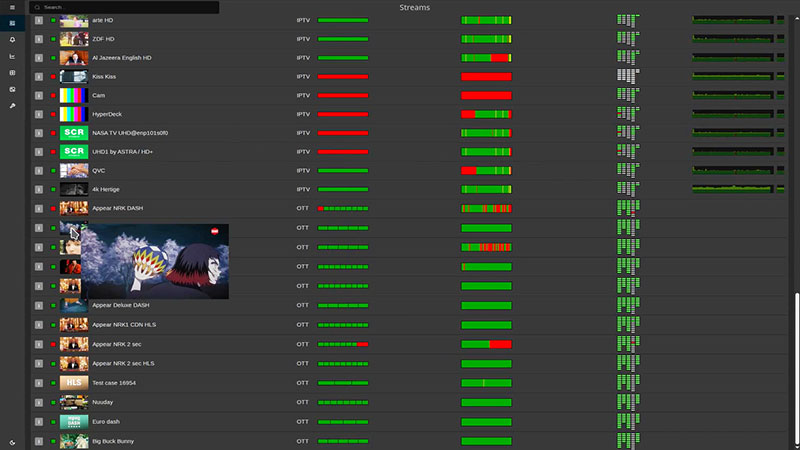
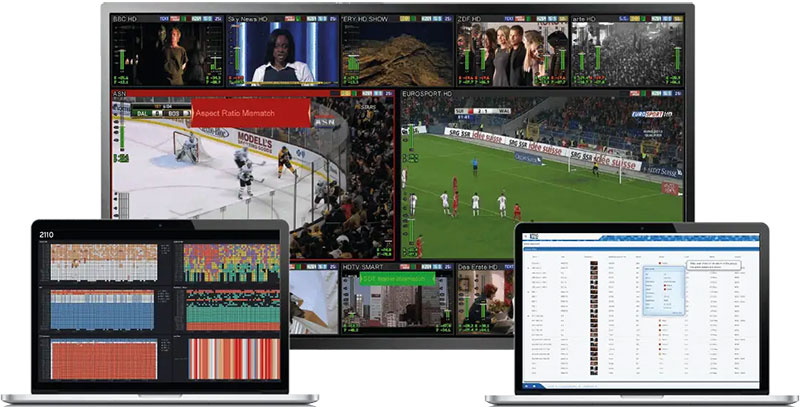
In addition to the transport optimisation enhancements, the latest Virtuoso release also includes new improvements for the operator, including customer-defined ‘Inspect’ views in the web interface. Through these views, users can bring selected function diagrams together on a single screen, making it easier to visualise and monitor the specific parts of a workflow that matter most to them.
The new Virtuoso developments can soon be seen at IBC 2026 in Amsterdam, 11-14 September. nevion.com