
Studio Hamburg has now moved its picture and audio post production pipeline in-house, using DaVinci Resolve Studio to replace legacy tools and outsourced services with a unified workflow.
Studio Hamburg Serienwerft is the post studio responsible for one of Germany’s longest running daily drama series, titled Rote Rosen or Red Roses. Broadcast on Das Erste, the main national television channel of ARD broadcasting, Rote Rosen has produced more than 4,200 episodes since 2006, for which the Studio Hamburg team was delivering 48 minutes of finished scripted drama each weekday.
However, that pace had begun to expose the limits of the production’s legacy post pipeline. The pressure to turn around episodes across multiple specialised teams placed increasing strain on systems that had become rigid and expensive to maintain.
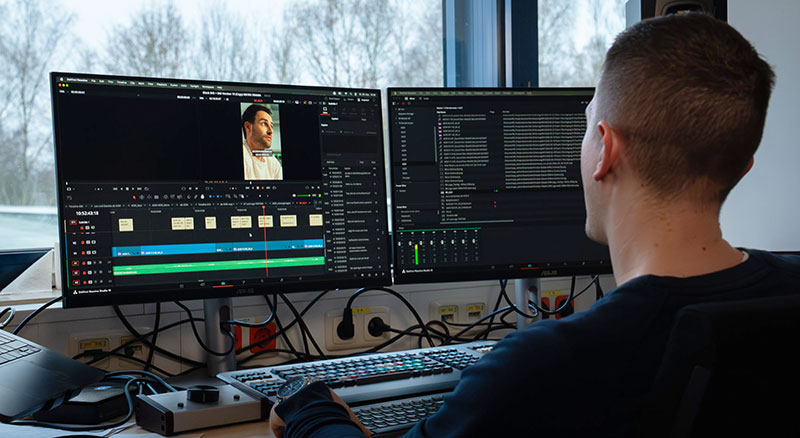
Consequently, the team has now moved its picture and audio post production workflow in-house, using Blackmagic Design DaVinci Resolve Studio. “There were years where every season we’d be told, ‘This could be the last one,’” commented Jonathan Happ, post production supervisor at Studio Hamburg Serienwerft. “At one point, they even considered cutting episode lengths to save money.”

A Fragmented Pipeline
In response, Jonathan began introducing Blackmagic Design tools into selected parts of the workflow, including ADR, VFX and audio cleanup. As those uses expanded, it became clearer that the existing, fragmented setup was adding a layer of logistics that no longer helped the production.
“Everything was built around AAF interchange tools to move video, audio and metadata between systems, external grading, sound transfers and so on. It resulted in an entire layer of logistical overhead that wasn’t helping the production,” he said. “We needed a unified system that allowed us to spend most of our time in the edit, not in transit.”
That same lack of control extended to infrastructure, for which the team relied heavily on third party providers for systems and services. “A huge chunk of the budget disappeared every month into those providers,” Jonathan said. “We didn’t own the tools. We didn’t own the infrastructure.”
A turning point came when he tested DaVinci Resolve Studio’s AI voice tools on his own documentary footage, using them to clean up heavy background noise. The speed and clarity of the results led him to present the test to the wider Rote Rosen team. “After that test, it became clear to us that Resolve could take on more of the work we were sending elsewhere,” said Jonathan.

Jonathan Happ, post production supervisor, Studio Hamburg Serienwerft
Edit-to-Delivery In-House Workflow
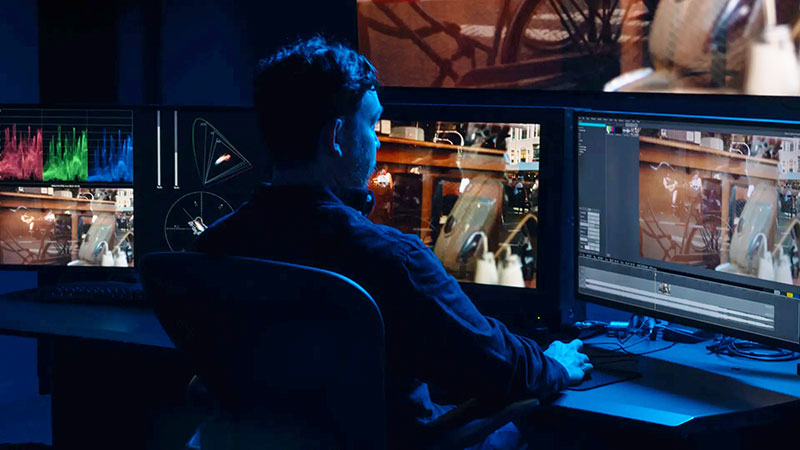
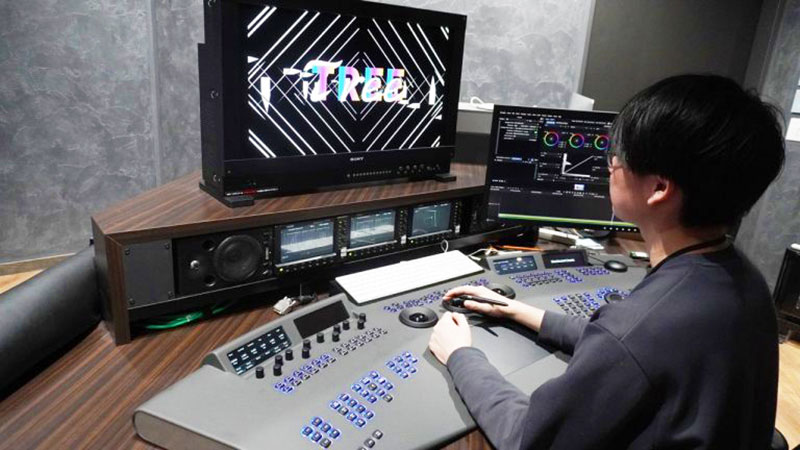
That became the catalyst for a redesign of the full post operation, led by Studio Hamburg Serienwerft Managing Director and Producer Jan Diepers. DaVinci Resolve Studio is now at the centre of a new in-house workflow spanning edit, VFX, colour, audio and delivery, supported by a NAS server running open source software.
“It costs a quarter of what we were quoted elsewhere,” Jonathan said. “The deployment of Resolve gives us the freedom to connect to our own APIs and manage storage the way we need to, as well as eliminating licensing delays. Moreover, scaling up doesn’t require a doubling of the infrastructure, the way it used to.”
Studio Hamburg has introduced API driven automation across such tasks as review exports, task management, deliveries to score artists, metadata transfers and other routine handoffs. As well as having less repetitive supervisory work to manage, the post team has more predictable control over day to day operations.

Fusion Templates
Editors can also use prebuilt Fusion templates for simple effects work that previously had to be outsourced to a VFX studio. Regarding colour, the production is now developing grading styles that the old pipeline could not have easily supported. Jonathan has even noticed that the new workflow is also simplifying recruitment and said, “The team finds it easier to bring in junior editors already familiar with DaVinci Resolve Studio.”
At the same time, the focussed, simpler pipeline is reducing day to day post overhead. “Removing the roundtripping process between editing, audio, encoding and effects applications is already saving us around 10 to 15 hours each week,” he estimated. “It also means we are no longer stuck simply reacting to the process, instead thinking more clearly about what the production needs next.” www.blackmagicdesign.com