

EditShare’s EFS shared storage and intelligent FLOW MAM system means the orchestra can record eight concurrent UHD ISO camera feeds with audio directly to storage, ready for post.
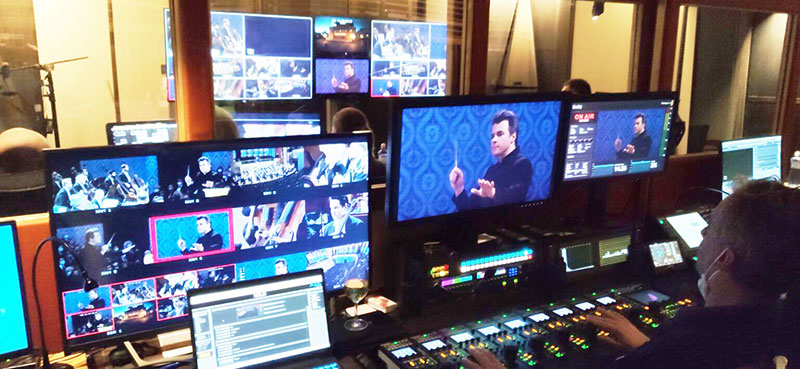
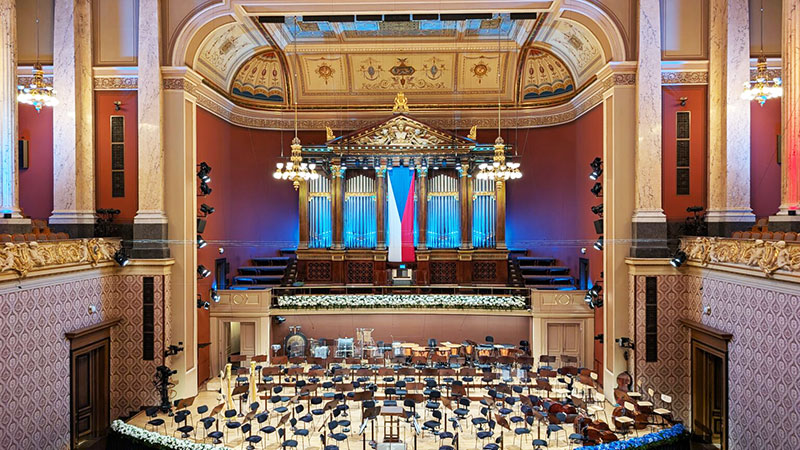
Based in Prague’s historic Rudolfinum concert hall, the Czech Philharmonic has evolved into a high-end media house since its early beginnings in 1894, and first performance in 1896. To meet the technical demands of 4K/UHD production today, the Philharmonic requires a stable infrastructure that can handle massive data throughput while bridging the gap between live recording and time-critical post-production.
Czech Philharmonic has expanded its production facility to better support the sophisticated UHD and HDR media workflows it now uses. In collaboration with long-term regional partner DISK Systems, the orchestra has undertaken an upgrade project deploying EditShare EFS shared storage and FLOW media management software. The combination serves as a high-performance foundation capable of managing their global broadcast and cinema releases.
The Philharmonic’s workflow involves recording eight simultaneous ISO camera feeds alongside high-track-count audio directly to storage, in this case the new EditShare EFS system. The scale-out architecture of EFS makes the necessary bandwidth and reliability available to prevent frames from being dropped during critical live recordings.
High-Bandwidth Stability
Based on software nodes that can be managed and monitored from a single point, scale-out architecture uses software-defined storage to separate the storage hardware from the storage software. The software nodes then act as the controllers – similar to regular storage controllers, but with visibility only into the disks they’re attached to.
The full scale-out system involves clusters of nodes that work together. Nodes can be added or removed, allowing features like bandwidth, compute and throughput to increase or decrease dynamically, as needed. Expanding capacity only requires adding new storage nodes and creating new clusters. Meanwhile, a single, comprehensive namespace is maintained.
Consequently, this type of architecture is useful for high-capacity, high-performance workloads that require low latency - like the post-production operations at the Czech Philharmonic. The EFS Native Client also improves performance by enabling direct data transactions between workstations and all storage nodes and, owing to Editshare SwiftRead, workstations retrieve data from other nodes in the cluster when a particular node is congested or unavailable.
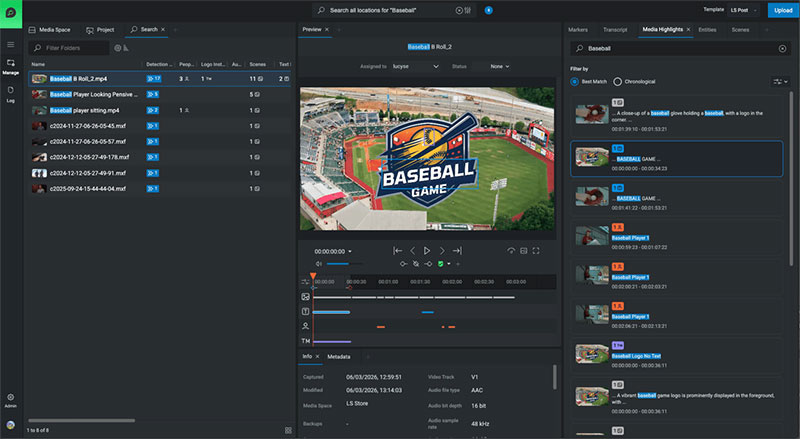
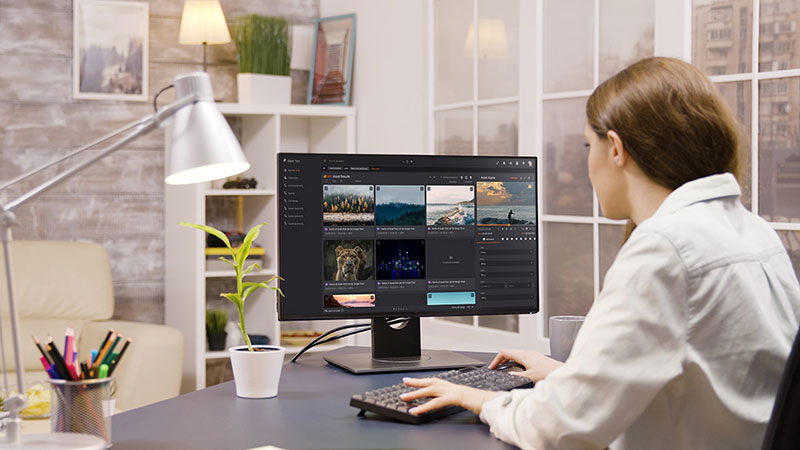
By layering the EditShare FLOW media asset management system over the storage, the Philharmonic avoids bottlenecks caused by manually managing data. FLOW serves as the media intelligence layer that the production teams use to log and tag the orchestra’s performances. FLOW oversees metadata, including that material related to specific orchestra movements, solos or technical cues, indexing it and making it searchable the moment the recording is complete. This process makes the media immediately ready for the edit suite.
Multi-cam UHD Recording
“EditShare FLOW and EFS give us the reliability and control we need for UHD production with multiple ISO cameras,” said Dušan Bajtoš, CTO Studio Rudolfinum. “Working with DISK Systems and EditShare, we can focus on capturing top quality performances, knowing that our media is secure and organised, but also immediately ready for post.”
EditShare Regional Sales Director Christian Plitt said, “The technical demands of the Czech Philharmonic’s UHD workflow are high, particularly in a live setting where reliability is everything. The combination of EFS for robust capture and FLOW for sophisticated media management ensures the Philharmonic can preserve this invaluable heritage to a high technical standard.” https://editshare.com/