

Under a multi-year agreement, LTN will implement a managed IP network delivering end-to-end connectivity, ISP services and two-way video transport across all PBS stations and services.

Public Broadcasting Service (PBS) in the US operates more than 330 public television stations and has station partners licensed in every state. It reaches over 36 million adults per month on linear primetime television, 16 million viewers on PBS-owned streaming platforms, 53 million on YouTube, and 60 million through social media, focussing on science, history, nature and public affairs, plus drama and performances from around the world. As the country’s top educational media brand, PBS KIDS helps children build skills for school.
The service is currently modernising and strengthening its interconnection system to keep the platform valid and up to date, thereby supporting the future of public media. PBS has selected LTN, a specialist in IP-based video transport and network services, as its IP video partner, and to help renew its content distribution and contribution infrastructure.
Modernisation Project
“Our IP network delivers the scale, reliability and flexibility required to support that transformation," said Malik Khan, Co-Founder and Executive Chairman, LTN. "LTN is pleased to serve as a reliable network and the operational foundation required to support one of the largest and most important media networks in the US."
The LTN Network will handle distribution of public television content, including PBS East and PBS West feeds, PBS KIDS, Create, NHK World and FNX (First Nations Experience), creating the ability to deliver up to nine linear feeds to PBS member stations.
Designed for broadcast-scale operations, the LTN Network delivers resilient connectivity globally and across the United States, including rural and underserved markets, while serving as a weather-resistant alternative or back-up to Ku-band satellite distribution. Networks typically use Ku-band for high-capacity services with smaller antennas, such as mobility and consumer applications, but also for short-range satellite links, data transfer and broadcasting.
LTN Contribution – Signal Acquisition and Routing
On the contribution side, LTN’s signal acquisition and routing system is protocol-agnostic and made for complex broadcast environments. It supports the common transport protocols with automated ingest and routing in order to reduce manual effort and improve efficiency, handling signals originating from cameras, laptops or studios. Users can continue to work with existing protocols and equipment without rebuilding workflows or investing in new infrastructure.

In operations managing dozens or hundreds of diverse feeds, LTN Contribution continuously ingests across physical and cloud locations, meanwhile preserving original quality. An unlimited number of concurrent feeds can be automatically recorded on ingest, out to a globally distributed network that functions as an automated exchange, simplifying the audio/video processing required to distribute to a range of destinations.
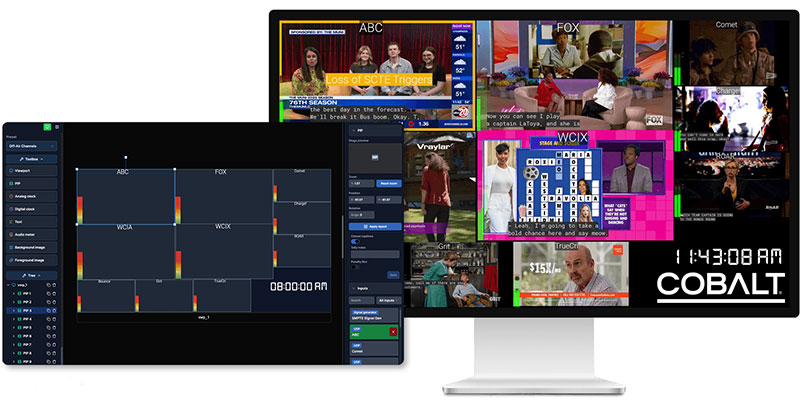
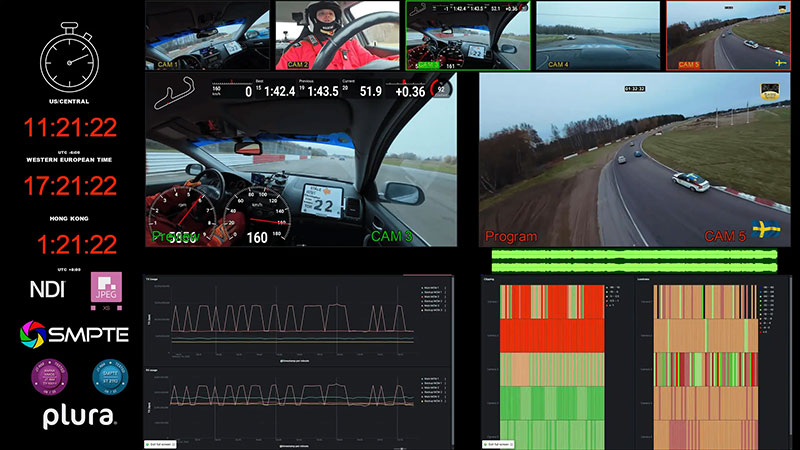
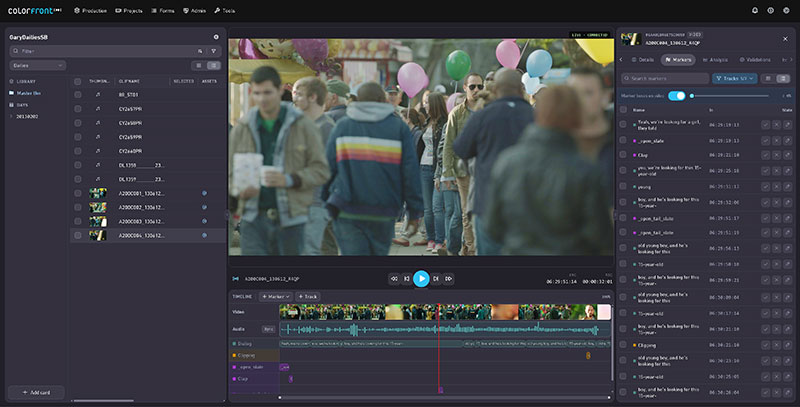
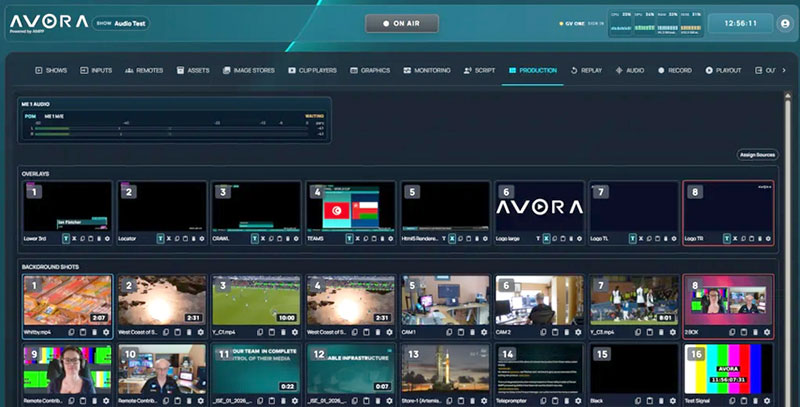
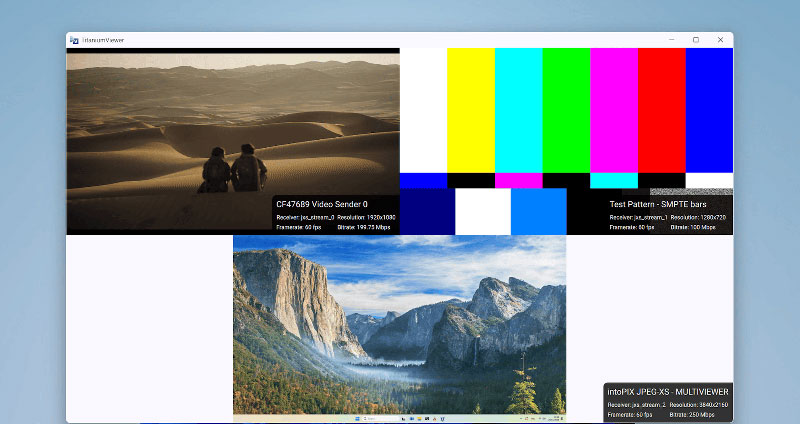
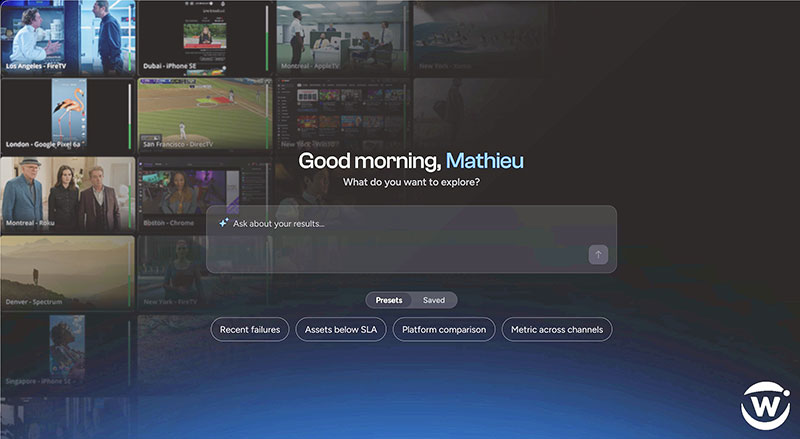
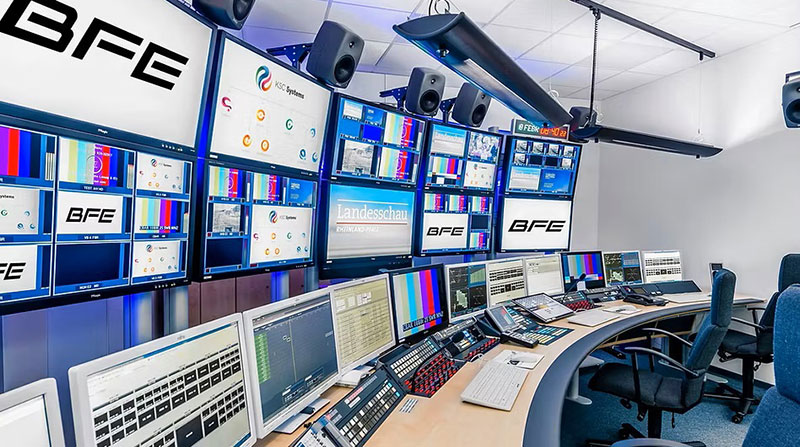
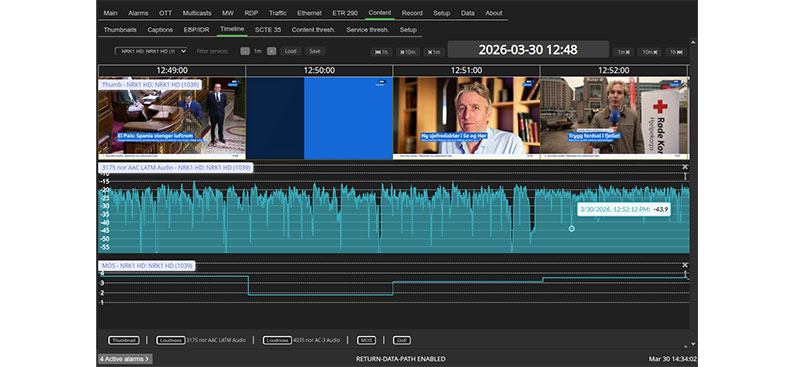
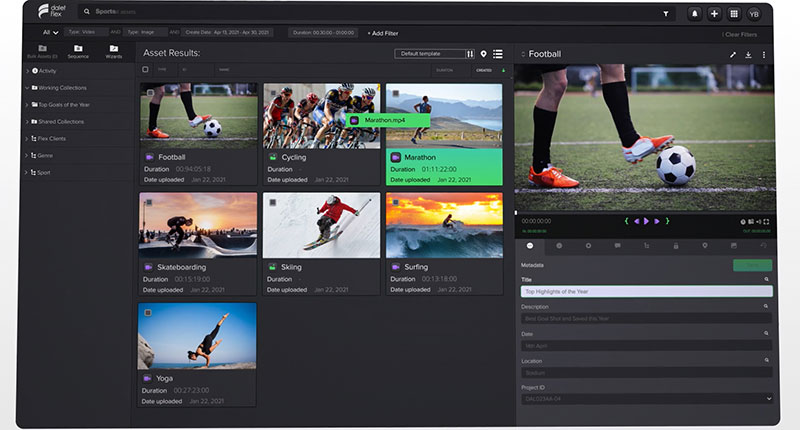
Real-time monitoring tools visualise stream health, encoding parameters and connection status. An on-going playback multiview allows the team to watch, filter and curate up to 48 signals simultaneously. From ingest to output, each signal can be monitored through a dedicated watch portal, pre-selected, routed for live mixing, and instantly recorded for highlight cuts.
Beyond ingest, LTN Contribution integrates into broader workflows as well by aggregating PBS’ signals from across its ecosystem and pushing them directly into playout, customisation and delivery. A single connection can be used to access cloud-based production, regional customisation, metadata signalling and international distribution.
Channel Distribution - Low Latency, Scalable, Automated Workflows
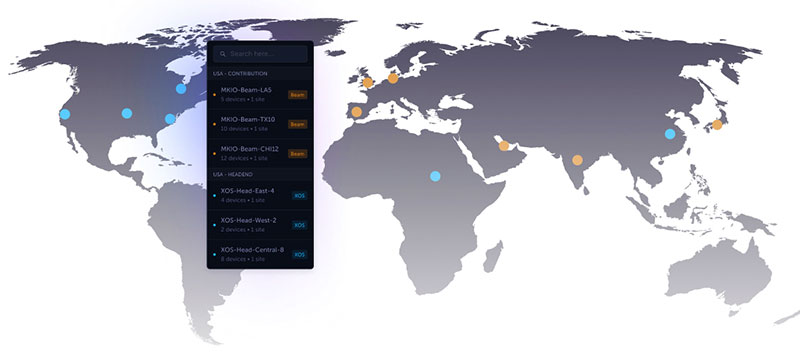
LTN’s global IP-based channel distribution service aims to combine satellite-grade reliability with flexibility from IP. Built on multiple data centres, each with multiple carriers – the networks that move data in and out of data centres, running the internet user experience – LTN includes built-in diversity and redundancy, achieving almost 100% uptime.
Like the Contribution side, live monitoring proceeds round-the-clock and allows the user to proactively route data around congestion, while LTN Station Manager synchronises directly with affiliates.

It is also capable of scaling, supporting a straightforward 10 channels to 10 locations scenario, up to a single channel reaching 1,000 locations. Content can be sent from any source to any destination – including cloud locations – while maintaining audio and video quality. For speed, an ultra-low-latency network spans markets across North America, Asia and further.
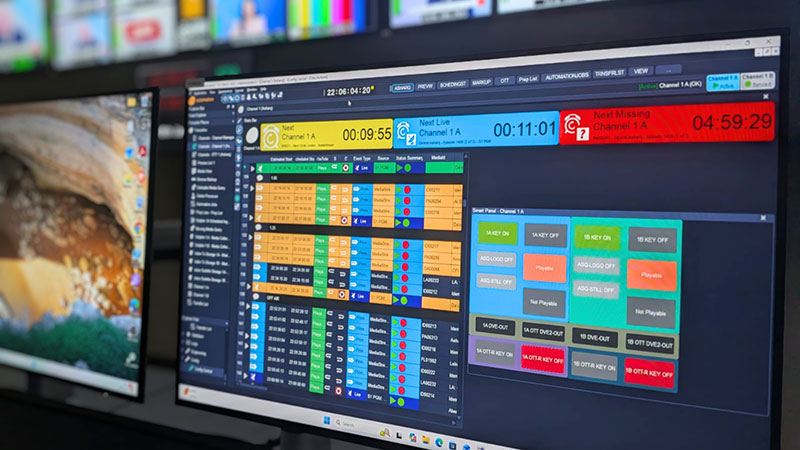
Automated workflows are also available to help limit operational complexity. These include in-network source switching, content replacement for rights management, automated triggers for dynamic ad insertion, plus an intelligent routing function that selects the optimal transport path. Channels can be managed via a UI or integrated with existing interfaces through an API, alongside a web-based watch portal.
Audience Reach
"Moving to a scalable, IP-based infrastructure will increase reliability, reduce costs and enable new opportunities for content sharing, collaboration and audience reach across the entire PBS system," said Dana Golub, Vice President of Strategic Infrastructure Initiatives at PBS.
The platform is fully managed and will make continuous content sharing possible among stations and support station contribution workflows for regional and national distribution of locally produced content. Furthermore, LTN will power contribution workflows for OTT distribution platforms, PBS Platforms like pbs.org and PBS Digital.
The deployment will begin immediately and continue through the end of 2026. ltnglobal.com