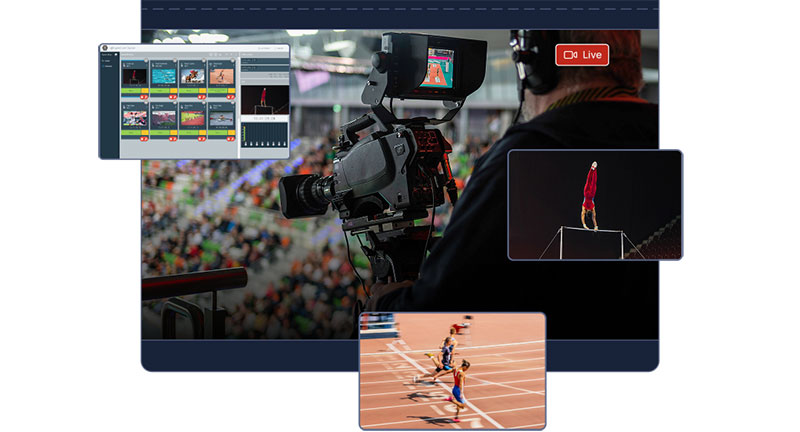


Harvard athletics crew delivers over 325 live NCAA Division 1 sports productions and 500 videos per year, building streaming, recording and signal conversion workflows on AJA gear.
As IP and remote production workflows come of age, collegiate sports production is also moving rapidly ahead. For an Ivy League institution like Harvard, keeping pace requires an agile production pipeline and dependable gear. Its athletics department delivers over 325 live NCAA Division 1 sports productions and 500 edited videos a year. For reliable video capture, streaming, recording and signal conversion, Harvard Sr. Associate Director of Athletics for Content and Strategic Communications Imry Halevi builds workflows on AJA gear.
He uses it not only to broadcast and stream games to fans, but also to create media that spotlights the personalities behind them, like the sailing team skipper working on vaccine lab research. Imry finds so many interesting stories that make Harvard and its athletes special. It is his department's job to make them discoverable to recruits, students, professors, coaches and parents.
"Creating compelling stories for audiences to watch across platforms while also preserving Harvard Athletics' rich history is our mission, which means we're never standing still. We are constantly gathering input from our core audience and innovating," he noted. "When it comes to our workflow, people depend on us to do our job well.. We, in turn, depend on equipment to get the job done, which means the flexibility and reliability of AJA’s gear are vital."
Pipeline Evolution
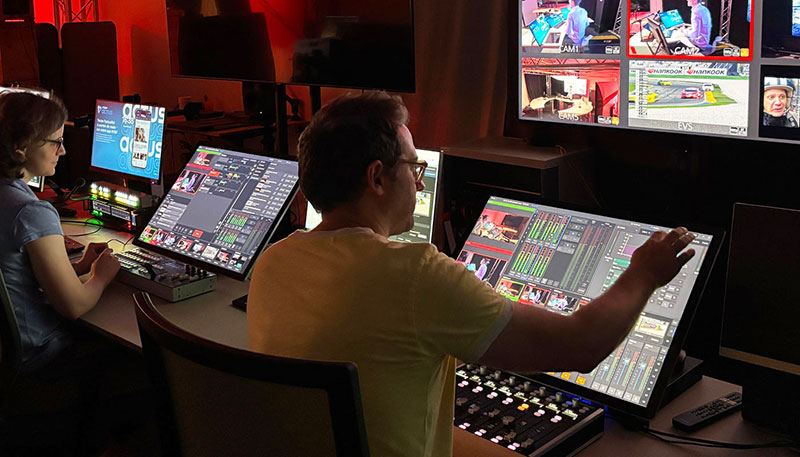
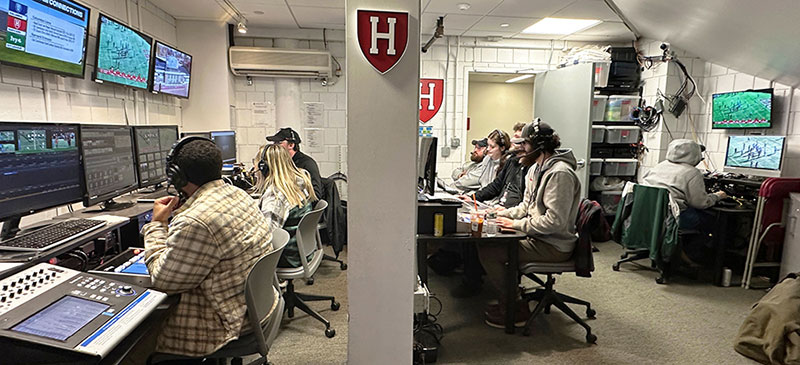
Harvard Athletics' production pipeline has evolved significantly since Imry joined the university 14 years ago. Back then, the crew travelled to each venue to produce the games, and scoreboard content was more limited. Today, most of the broadcasts, streams and scoreboard media are produced remotely for distribution to more channels using two centralised, on-campus control rooms that power a distributed NDI workflow.
"We now remotely produce everything from two master control rooms and are streaming to more platforms than we ever have before. We're creating long-form content for YouTube and ESPN+, and short-form videos for Instagram, Facebook and TikTok," said Imry. "Our team is experimenting a lot with 9:16 format and reshaping our scoreboard media based on fan input."
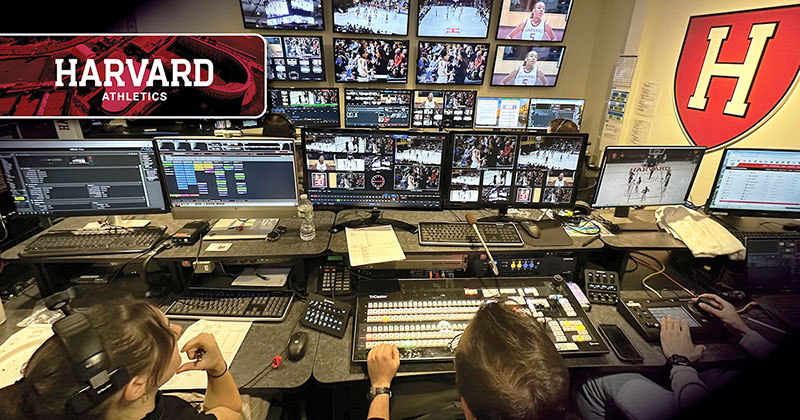
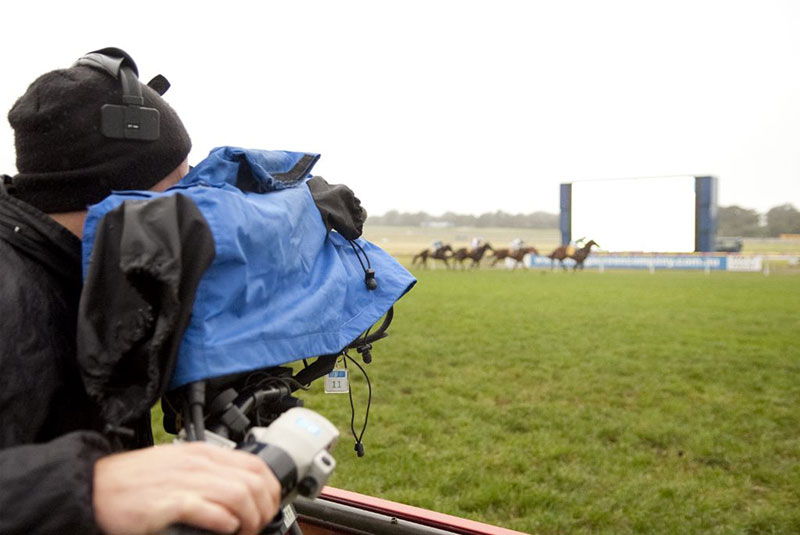
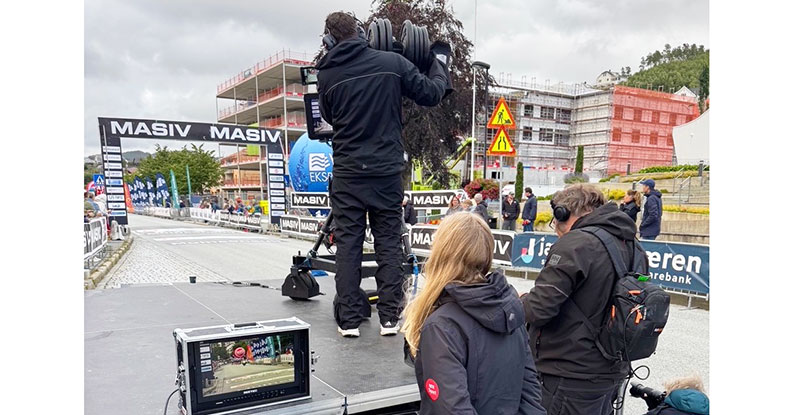
With its remote infrastructure in place, the crew can readily produce four shows simultaneously. Halevi can manage a basketball game for ESPN and an in-arena video board show, while also facilitating soccer and field hockey productions. If his crew needs to produce more than four events, he can make use of portable fly packs. For off-campus events, like rowing in New Jersey, skiing in Vermont, and sailing on the Charles River, Halevi sends the main feeds to the campus control rooms for production, with camera operators often the only ones to travel.
Fleet of Devices
Using the NDI pipeline Imry built, the team can deliver high-quality 720p 59.94 streams and use their existing network without having to add more capacity. But even with NDI devices at the edge, SDI and fibre remain part of the workflow. To push NDI signals to SDI monitors and convert fibre to SDI, the crew uses AJA BRIDGE NDI 3G and FiDO Mini-Converters.
"If I'm producing a game and I have an SDI source I need to distribute via NDI, I just send it to the BRIDGE NDI 3G. The fact that I can preview everything in the UI with 16 windows has been helpful for our workflow," he said. "We also have a huge fleet of AJA FiDO fibre converters in a rack, which are convenient for converting fibre to SDI on copper to use on our switchers."
AJA U-TAP also supports remote production, for instance, allowing the commentators to work from home on Zoom, convenient for sports like rowing for which races start very early in the morning. Imry’s team just sets up the commentator with Zoom on a computer and a U-TAP, so they can see and hear the production and know what they're calling. The device also supports social streaming – they can deliver their produced live game stream to TikTok Studio software on Windows.
Running Round the Clock
Twenty-six AJA HELO Plus devices power H.264 streaming and recording. Running all the time, they deliver one game feed to Harvard Athletics' international streaming site and another to its real-time clipping and tagging solution for the creation of social media highlight clips.
"Our HELOs run constantly without issue, and the audio meters in the interface and on the physical device are huge. Plus, we can monitor, start and pause recording and streaming remotely from the UI, which is helpful for remote production," he noted.
"We also love the layout feature. We can view a recording of different in-venue video displays at the same time, so we can see an SDI stream on the centre display and an HDMI stream of the ribbon board, then use the feature to make them look nice and work well with each other. The HELO Plus essentially becomes a small but powerful switcher, and has been a lifesaver."
Innovation remains a continued focus for Imry as he strives to make the department's storytelling even more engaging for audiences while using his resources more wisely. "We're continuously looking at how we can improve our content to shine a light on what makes Harvard so special, and accessing reliable tools from manufacturers like AJA frees up more of our time to do that by reducing troubleshooting and headaches," he said. www.aja.com