

Media archives, long viewed simply as storage destinations, face new demands – from accessibility and discoverability to security and data integrity – that are redefining their role.

Photo by Israel Andrade on Unsplash
Hossein ZiaShakeri, Sr. VP, GM Media & Telecom, Spectra Logic
Media archives have traditionally been viewed as storage destinations. Once a project was complete, the final files, raw footage, graphics, audio, project assets and related metadata were moved out of active production environments and placed into long-term storage. The archive’s main purpose was to preserve content, free up production systems and serve as a place to retrieve assets to repurpose.
That role has been changing. Today’s media archives are no longer passive repositories at the end of the workflow. They are critical to the content lifecycle. Production teams need to reuse, repurpose, license, retrieve and redistribute content across more channels than ever before. At the same time, content libraries are expanding in size and complexity as organisations retain higher-resolution files, larger project packages and more versions of creative assets for longer periods of time.
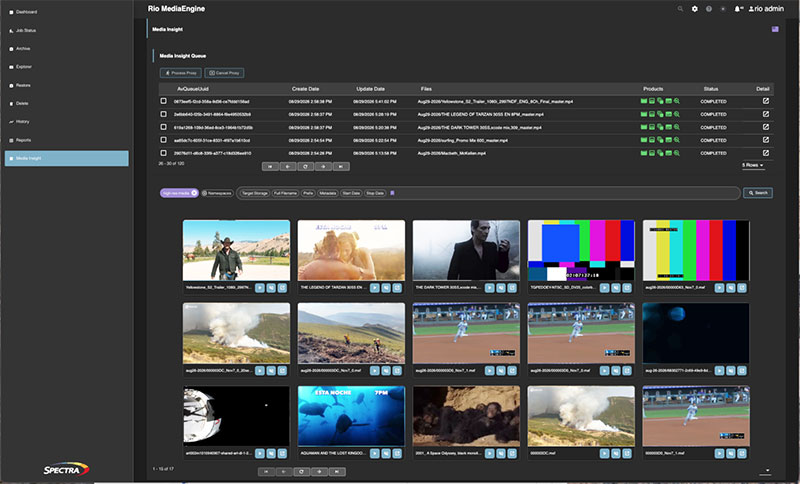
As these environments grow, the archive becomes more than a storage concern. It becomes an accessibility, discoverability, governance, security and workflow challenge. The question is no longer simply whether content can be stored affordably. The question is whether archived content can retain its data provenance and remain organised, searchable, discoverable, accessible, protected and trustworthy throughout its lifecycle.
For media organisations, this shift requires a more mature approach to archive management. Capacity still matters, but operational clarity, access control, enterprise authentication and data integrity and availability are now just as important.
Clarity Reduces Operational Risk
Archive challenges often begin with ambiguity. Over time, different teams may develop their own naming conventions, folder structures, metadata practices and storage workflows. One group may organise content by project name, another by production date, another by client, and another by final delivery format. These differences may seem minor at first, but they become harder to manage as the archive grows.
In large media environments, unclear structures can create real operational risk. Teams may struggle to find the right version of an asset. Duplicate files may accumulate. Archived content may be moved or retrieved incorrectly. Users may misinterpret where content lives or how it should be managed. When deadlines are tight, even small inefficiencies can delay production or distribution.
A mature archive strategy starts with clearer taxonomy, a consistent structure and data enrichment. Teams need to define how their assets are named, grouped, described, retained and retrieved. The structure should reflect how people actually work, not just how storage is configured behind the scenes.

Photo by Igor Omilaev on Unsplash
This clarity is especially important as archives become shared across more departments, business units, and workflows. A well-structured archive should be understandable not only to the person who stored an asset, but also to future users who may need to locate, retrieve or reuse that content months or years later.
Access Control Must Scale with the Archive
As more people rely on shared archives, access control becomes more complex. Media archives may support producers, editors, archivists, IT teams, compliance staff, contractors, partners and external collaborators. Each group may need a different level of access, depending on its role and responsibilities.
Managing such an environment user-by-user can quickly become inefficient and risky. People change roles, contractors leave, projects end and new teams are added. If permissions are handled manually or inconsistently, organisations can end up with users who have too much access, outdated permissions or unclear responsibilities.
A more scalable model is to manage access by roles and groups. Instead of assigning permissions one person at a time, administrators can align access with how the organisation actually operates.
Production teams may need access to active project archives. Compliance teams may need read-only access to retained assets. External partners may need tightly limited access to specific files or folders. Administrators may require broader rights, but those rights should still be governed by policy.
This approach supports both collaboration and control. Users can access the content they need without unnecessary friction, while administrators can apply policies more consistently. As the archive grows, this becomes essential. Access control should not become more fragile as the environment becomes more vital.
Enterprise Authentication, Security and Accountability
Similar to the shared scenario, modern media workflows are more inclined to be distributed across facilities, cloud environments, remote teams and partner ecosystems. Again, in those environments, archive access should not rely on isolated credentials or informal user management practices.
Enterprise authentication brings archive access into the broader security framework of the organisation. By connecting archive systems with centralised authentication practices, organisations can apply more consistent controls across users, groups and roles, making it easier to manage who has access, how they authenticate and how permissions change over time.
Such procedures not only improve security, but also support accountability. Media organisations often need to understand who accessed content, when it was accessed and what actions were taken. That level of visibility matters for intellectual property protection, contractual obligations, internal governance and audit readiness.
As archives become more central to media operations, authentication can no longer be treated as a secondary feature. It is part of the foundation that makes the archive manageable and trustworthy at scale.
Integrity Checks Build Trust in Archived Content

Photo by Arlington Research on Unsplash
An archive is only valuable if the content can be trusted when it is retrieved. Preserving files is not enough. Organisations need confidence that the files remain intact, unchanged and usable throughout their lifecycle. This is where consistent, automated data integrity checks become critical. Validation methods help confirm that archived content has not been altered or corrupted. Ideally, integrity validation should happen automatically as a background processing task, rather than depending on manual checks.
This matters because archive issues are often discovered at the most critical moments. A team may need to retrieve footage for a deadline or a client request, to support a legal requirement or to recover content after a disruption. If a file is corrupted, incomplete or different from what was originally archived, the organisation may face delays, lost productivity or reputational, legal or commercial damage.
Consistent, automated integrity checks help reduce that risk. They afford confidence that retrieved content is the same content that was originally archived. For media teams under pressure, that assurance is essential.
Availability Matters More Than Storage Alone
Many archive conversations focus on durability, or the likelihood that data still exists. Durability is important, but it does not tell the whole story. A file may technically still exist, but if it cannot be retrieved completely, predictably and within the necessary time frame, the archive has failed from an operational perspective.
Availability is the practical measure that matters when content is needed. Can the team locate the asset in a timely manner? Can the right people access it? Can the file be retrieved without corruption? Can additional copies be retrieved transparently if needed. Can the workflow support retrieval under pressure? Can the organisation prove that the content is authentic and intact?
These questions connect archive management directly to governance and workflow resilience. The archive must do more than retain data. It must preserve the organisation’s ability to use that data when it matters.
Archive Management Requires Cross-Functional Ownership
A stronger archive strategy cannot be built by one team alone. Production teams understand how content is created and reused. Archivists understand metadata, retention and long-term preservation. IT teams understand infrastructure, identity and scale. Security teams understand risk, permissions and accountability. When these groups work separately, archive practices can become fragmented. When they work together, the archive can become a reliable foundation for the entire content lifecycle.
The goal should be to reduce friction without reducing control. Clearer structures and proper enrichment, help teams work faster. Role-based permissions help access scale safely. Enterprise authentication improves accountability. Consistent automated integrity checks protect trust. Together, these capabilities turn the archive from a passive storage layer into a mature operational platform.

Photo by Kevin Ache on Unsplash
Building a More Mature Media Archive
As content libraries continue to grow, media organisations need to rethink what archive management is meant to accomplish. An archive is not just a place where content goes when work is finished. It is part of how media organisations preserve trust, support new production, collaboration, keeping content discoverable, findable and usable throughout its lifecycle.
Likewise, the future of the archive is not just about storing more data for less cost. It is about ensuring that content remains accessible, discoverable, protected and trustworthy over time.
That requires a focus on operational clarity, scalable governance and built-in confidence. The time and effort of simplifying archive structures, standardising metadata and naming practices and automating enrichment pay off over time, as do aligning permissions with roles, integrating authentication with enterprise identity systems and automating integrity validation wherever possible.
These steps may not seem dramatic, but they address some of the most common sources of archive risk. They help teams avoid confusion, reduce administrative overhead, strengthen security and improve confidence in long-term content access.
For media organisations, archived content represents creative, operational and commercial value. It may be reused in future productions, licensed to partners, retrieved for remastering, referenced for compliance or recovered after disruption. Protecting that value requires more than capacity, and requires archive management practices that can scale with the organisation. spectralogic.com