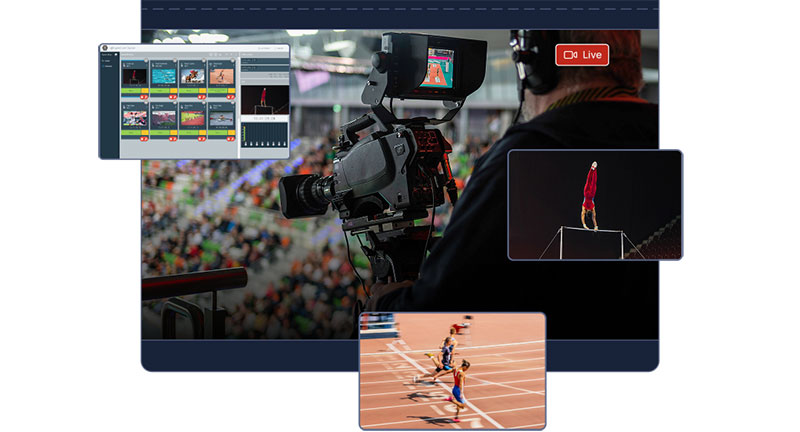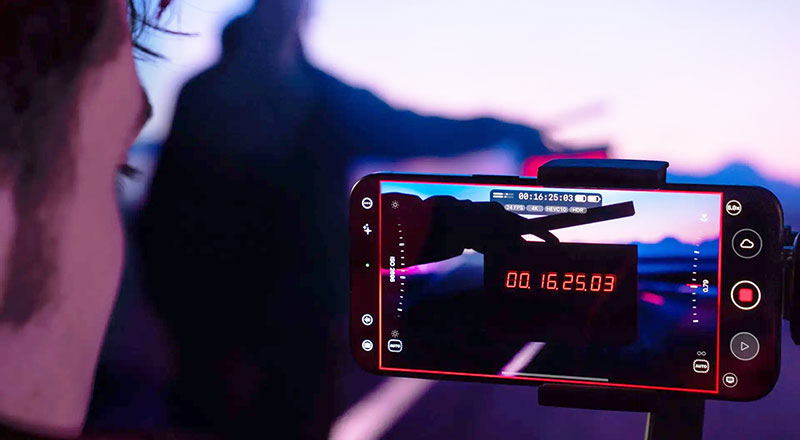


Videe developed and tested new live workflows using Sony 5G production kits based on the NXL-ME80 edge processor, CBK-RPU7 remote production unit and PDT-FP1 data transmitter.
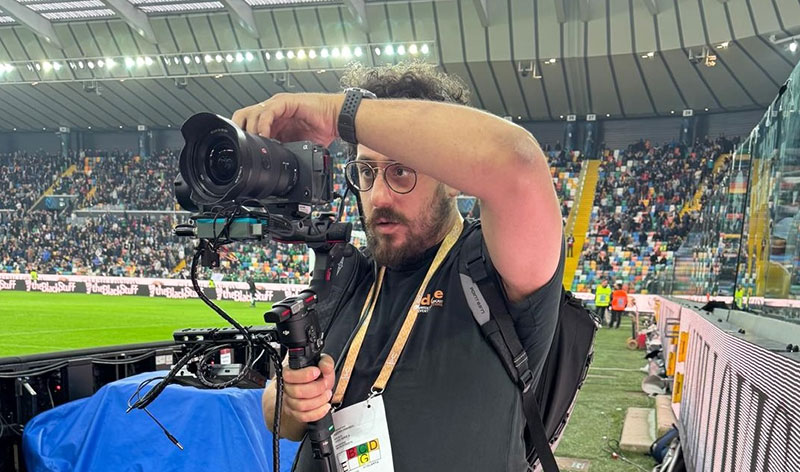
Italian broadcast production company Videe has been developing and testing new live workflows using Sony’s 5G production technologies. Following a commercial trial, during which the company tested several different systems, Videe has now adopted six Sony 5G kits based on the NXL-ME80 media edge processor, CBK-RPU7 remote production unit, and PDT-FP1 portable data transmitter.
As one of the most active early adopters in the Italian market, Videe’s and Sony’s collaboration tested how 5G connectivity can simplify live production, enhance mobility and support more agile on-location workflows. An important step in the project were the recent Nitto ATP Finals. Videe supplied technical infrastructure that Sony and ATP Media deployed to deliver a 5G Proof of Concept during the tennis tournament’s broadcast operations that made it possible to support both camera and connectivity in the same infrastructure.
Fast, Flexible NXL-ME80
The NXL-ME80 Media Edge Processor is focussed on image quality and latency, even at low bitrates, through the use of HEVC compression. Users select bitrates according to requirements, in both HD or 4K resolutions, and a dedicated ultra-low latency mode is available to reduce encoding and decoding latency. Its 1U half-rack size is very compact and dense – it can handle up to 8x HD (2x 4K) total streams, with uni- or bi-directional configuration. SDI and ST2110 interfaces are also available, with HFR.

These features give the NXL-ME80 flexibility across many different productions, including live sport and remote workflows. As 5G becomes more widespread, as in this Videe scenario, its ability to transmit large volumes of data with low latency and stability gains importance. With bandwidth optimisation from Sony's CBK-RPU7 network encoder, remote users can transmit from locations to studios and in live production environments, using the NXL-ME80 as a receiver.
Potential for Broad Adoption
The tests were conducted during the Marcialonga, an annual cross-country ski race held in Trentino, advancing the ongoing trial significantly. By deploying an additional camera to cover the finish line and celebration areas, the company was able to assess the impact of snow on 5G transmission and the effect of bandwidth on the throughput. According to Sony, the results were very encouraging, confirming the system’s ability to adapt to different production scenarios and broader adoption of the technology.
In parallel, Videe tested the 5G solution across a wide range of other demanding scenarios, including sailing competitions, football matches and reality TV productions. “Through these tests the company has been able to validate the system under high-movement, dynamic and bandwidth-intensive conditions,“ said Gino Campagna, R&D Coordinator at Videe. “This paves the way for a broad portfolio of services and future developments, supported by a fast, reliable, dedicated infrastructure, in an IP environment.”

Data Transmission
Videe worked with an Italian telecommunications operator for the consultancy phase regarding the acquisition of specific 5G infrastructural expertise and the use of frequencies in the complex, crowded Italian landscape. They wanted to monitor and explore the shift from traditional RF, satellite and bonded-cellular workflows to IP- and 5G-based production models along with the new services they enable.
Using Sony’s PDT-FP1 portable data transmitter with 5G networks allowed them to shoot and upload the high-resolution images directly from the camera to a cloud-based editorial system or server destination in real time. There, producers were able to rapidly select and publish images with stability.
The PDT-FP1 connects to a Sony camera via cable, data is imported into it and then automatically transferred to the destination via USB or Ethernet, or to Sony's cloud service. Once setup is complete, the Camera Wired Connection setting will automatically transfer files.
Dual SIM Support
The device’s dual SIM capability means that it supports both a physical SIM and an eSIM, and allows switching between them. It automatically selects the stronger network based on signal conditions and switches SIMs for data transfer. The antenna design is optimised for greater reception sensitivity, for high-speed, low latency communication over LTE and local or private Sub6 and mmWave networks.
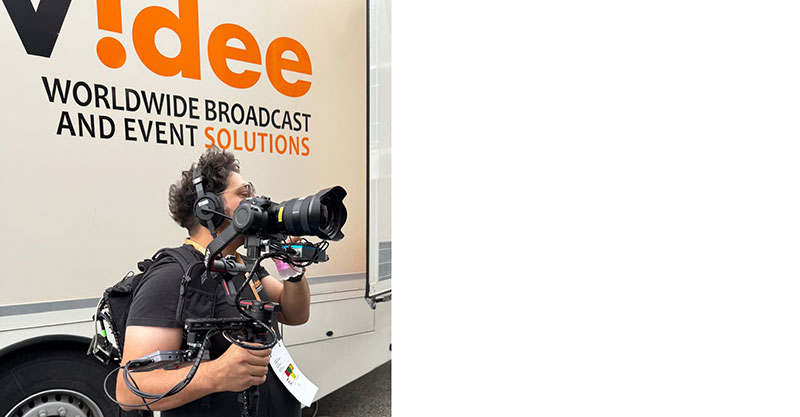
“As our industry evolves, 5G represents a significant opportunity for flexible, high-quality remote production,” said Bruno Mercuri, President & Founder, Videe. “Sony’s solution is helping us test the limits of what’s possible while maintaining the reliability our clients expect.”
"We are pleased to have enabled the testing of advanced 5G systems,” said Norbert Paquet, Strategic Marketing Manager, Sony Professional Europe. “Sony is continuously involved in developing technologies that optimise the efficiency of production processes and enhancing the service quality – objectives that 5G is fully capable of supporting. This initiative is part of a broader journey that includes a growing number of successful 5G trials already carried out.” pro.sony