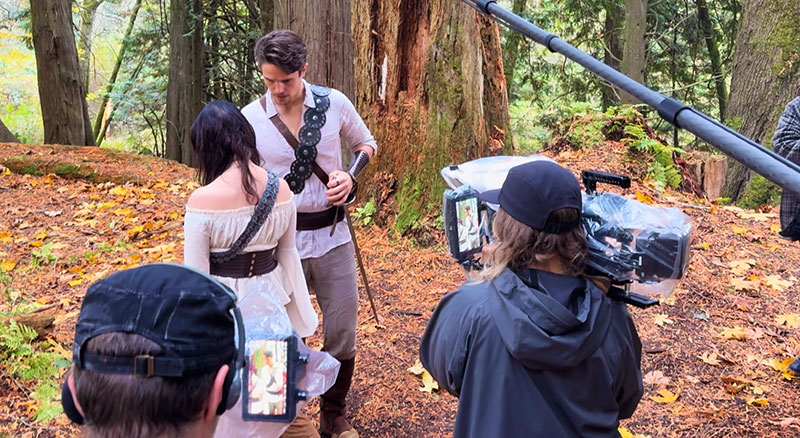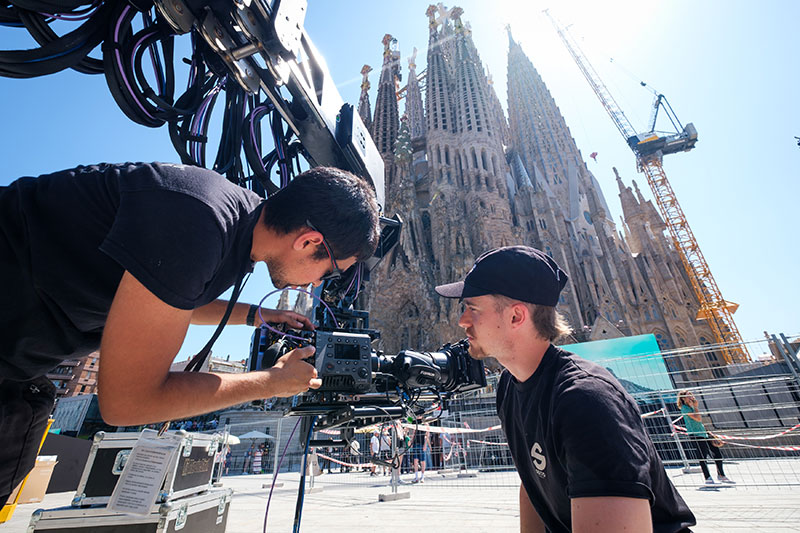


Filmmaker Tyler Edwards shot open gate on URSA Cine 17K’s 65mm sensor, recording the city’s sites with a much bigger sensor than typical full frame cameras with a native 2.2:1 aspect ratio.

Charleston, South Carolina, has recently released a new tourism campaign, highlighting the city’s natural beauty and cultural heritage. As a part of the project, filmmaker Tyler Edwards shot a set of commercials and short films, aiming to capture the city’s beaches, ocean fronts and forests, as well as its best known landmarks.
“This project was for a client in the tourism industry here in Charleston. I had the opportunity to shoot with Blackmagic Design's URSA Cine 17K 65, and wanted to see how the camera would perform in various parts of our beautiful city, in both interior and exterior scenes.”
Shooting Open Gate at 65mm
One of the main reasons Tyler chose the URSA Cine 17K 65 was because of the ability he would have to shoot open gate at 65mm. He said, “I have been using Blackmagic cameras since the original Cinema Camera 2.5K came out in 2012, so the URSA Cine felt almost like second nature when I first picked it up. Nevertheless, what felt new right away was the massive 65mm sensor.
“This sensor is much bigger than a typical full frame camera and gives you a native 2.2:1 aspect ratio when filming in open gate 17K. The result is very distinctive and really fills out the frame. To me, it felt as if I were there, in the shot – almost larger than life.”

Tyler shot the entire project using the URSA Cine 17K 65, shooting mostly in 24 fps and occasionally 48 fps. His first shoot was of a sunset cruise on a small boat, using nothing but natural light.
“With the camera’s sensor, I knew I didn’t need to use bounce cards or any shaping to manage the light – and it worked out extremely well. Normally, I would expect some harsh highlights and problems with the highlight rolloff from the sunlight hitting skin tones, but there was none. I was truly impressed by the dynamic range of the 17K sensor,” he said.
Blue Hour Looks
Although the shoot continued until after sunset, the camera readily adapted, drawing details from shadows and dimly lit areas. “We were running inevitable into blue hour and a low light scenario. I noticed that even in that minimal light, I could still really push the image and keep everything looking really clean," said Tyler.
“That would become especially important in post because I was starting with a shoot at 17K and converting the video down to a 4K timeline in editorial and the colour grade. The sensor handled low light tremendously as well. Even with a simple grade, there is so much detail all the way from highlights to shadows."
Charleston is renowned for its historical architecture. A shot that stands out among the others was recorded at Nathaniel Russell House, a National Historic Landmark where Tyler needed to shoot with minimal crew and lighting.
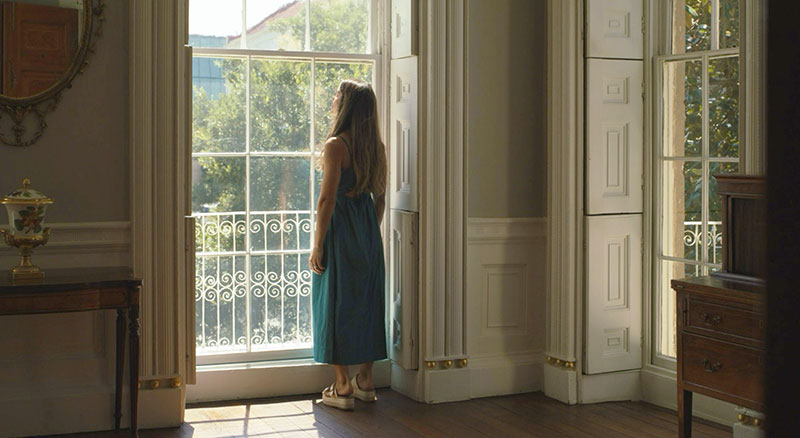
“We had to rely on the breadth of the sensor’s dynamic range to handle the mixed lighting coming in from the various windows and the ambient tones inside the house,” he said. “The shoot worked out better than I expected, and I think my favourite shot of the entire project was one where we didn’t use a single light and only had a Dana Dolly pushing in to reveal a door frame and the talent walking towards a window. Everything was perfectly exposed, from highlight to shadow.
“Shooting in this house, the two features that jumped out at me the most were just how remarkable the dynamic range was and also how clean the image sensor is, especially in terms of shadows and low light.”
Resolution and the Colour Filter Array
Tyler commented that, at the same price, no other camera is available with such a large sensor, as high a resolution and selectable frame rates. "Not to mention the fact that the camera has an RGBW sensor, meaning you can shoot in 17K, 12K, 8K or 4K without cropping in on the sensor," he said.
Most modern camera sensors have a Bayer colour filter array holding red, green and blue photo-sites that repeat on a 2×2 grid pattern. Instead, Blackmagic uses its own proprietary array that repeats on a 6×6 grid, and includes white as well as red, green and blue photo-sites. This architecture has some advantages when it comes to resolution.
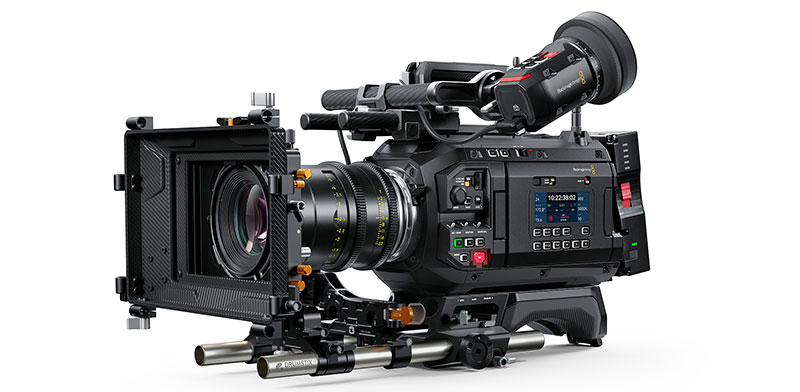
Building a high resolution sensor like the URSA 17K’s usually means reducing the size of each photo-site, which limits its low-light capabilities. However, this camera’s large format design features larger photo-sites. Also, without a colour filter in front, the URSA’s white photo-sites can absorb more light. This light combines with the colour information from the other sites, and increases the sensitivity of the whole sensor.
Downsampling
Also, downsampling the images from a camera’s highest possible resolution usually involves either cropping, which means changing the field of view, or recording to a different codec. But the URSA allows in-sensor scaling with no artefacts, no cropping and no change of codec - again, due to the sensor architecture.
In each 6×6 grid, half of the photo-sites are white, and the rest are divided evenly between red, green and blue. When the camera operates in its highest resolution mode, each photo-site is read individually, but at lower resolution modes, the white photo-sites and the coloured photo-sites can be paired together and placed in different sized grids. During processing, instead of the camera having to read every site, in effect, it only reads half as many, doubling the readout speed.
Furthermore, in lower modes, the camera is able to extract raw images in more than one resolution, from the same sensor. The large format look achieved in 17K is preserved, but users can save substantially on data and still access higher frame rates and a faster readout speed. www.blackmagicdesign.com