


Aiming to engage with wider audiences and help visitors connect with artwork, the Institute’s production department regularly produces video content with Blackmagic cameras and gear.
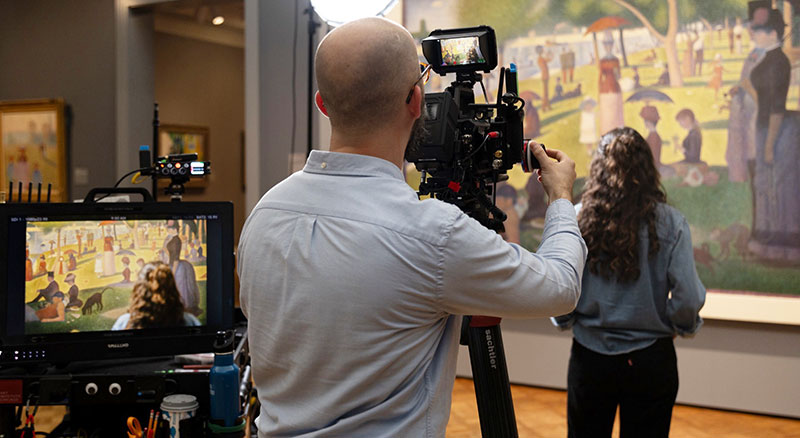
Founded in 1879, the Art Institute of Chicago is one of the world’s leading art museums, dedicated to collecting, preserving and interpreting works of art that span time periods, cultures, geography and identity.
Always aiming to share its artwork with broader audiences, the museum’s production department regularly creates video content for its exhibitions and marketing purposes. It also collaborates with other teams around the museum to create content for its partners, from tourism groups to the museum’s own HR department.
Navigating the Museum
According to Creative Director of Digital Content Kirill Mazor, “Our objective is to engage with visitors, as well as connect people who can’t be at the museum with our collection, so we do a lot of R&D into new techniques that will help us reach our existing audiences and discover new ones.”
New cameras and associated gear feature largely in their research. The museum has most recently added two Blackmagic Design PYXIS 6Ks to its inventory, having used other Blackmagic equipment for several years. “We have used the PYXIS cameras for a range of our productions and our on-the-fly social media content,” said Kirill. “The compact form factor and full frame sensor are practical for the low light of the museum galleries, and we adapt the modular build for our different shooting situations while keeping our set-ups simple.
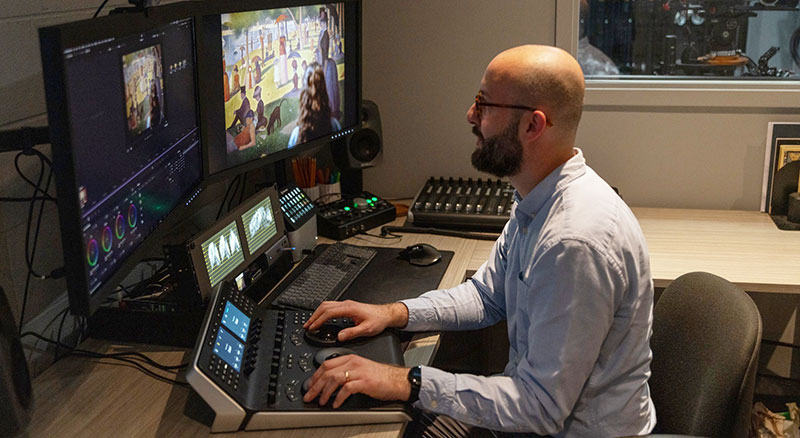
The museum also uses Blackmagic URSA Mini Pro 4.6K G2 and Blackmagic Pocket Cinema Camera 6K Pro digital film cameras. The Digital Content team shoots in Blackmagic RAW and colour grades in DaVinci Resolve Studio with a DaVinci Resolve Mini Panel. The museum’s AV integration team uses HyperDeck Studio HD Mini broadcast decks for some of their time-based media and exhibition content.
By connecting the devices on a networked system, they can control and monitor the HyperDeck Studio HD Minis remotely. During production, the Digital Content team can record their video files directly onto SD cards and SSD media, and then mount the media on a computer to access the files using regular video software. For flexibility, they can make ISO recordings using the HyperDeck’s built in timecode and reference generators, and then synchronise multiple units for the final playback.
Two Special Exhibitions
The Art Institute of Chicago recently produced two major special exhibitions, including ‘Georgia O’Keeffe: My New Yorks’, for which the team used Blackmagic Design gear to create content, from pre production to post.
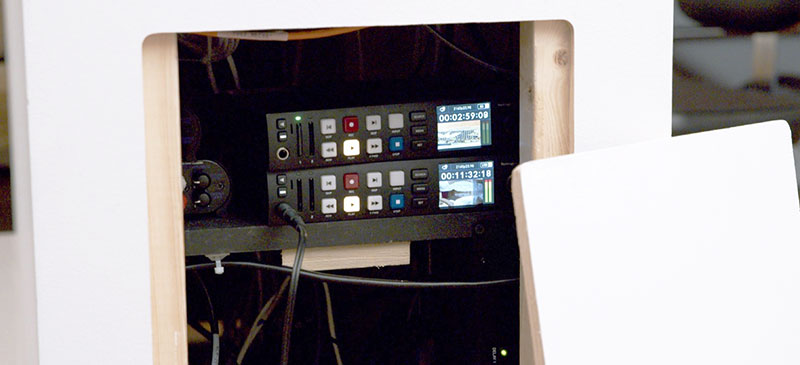
HyperDeck Studio HD Mini broadcast deck
“We were able to develop our own top-down approach for showcasing ephemera from the exhibition. We used the cameras to efficiently scout locations in pre production, choosing the settings to dial in exactly how we wanted our interviews to look,” Kirill said. The video was graded in DaVinci Resolve Studio and played back for the exhibit from the HyperDeck Studio HD Minis.
Another recent exhibit titled ‘Van Gogh and the Avant Garde: The Modern Landscape’ was produced in a similar way – grading the material for continuity in DaVinci Resolve Studio with gallery playback from the HyperDeck Studio HD Minis.
The Story is in the Look
Colour grading is actually one of the most critical parts of the museum’s post production workflow, using DaVinci Resolve Studio and the DaVinci Resolve Mini Panel together to lend control and precision.
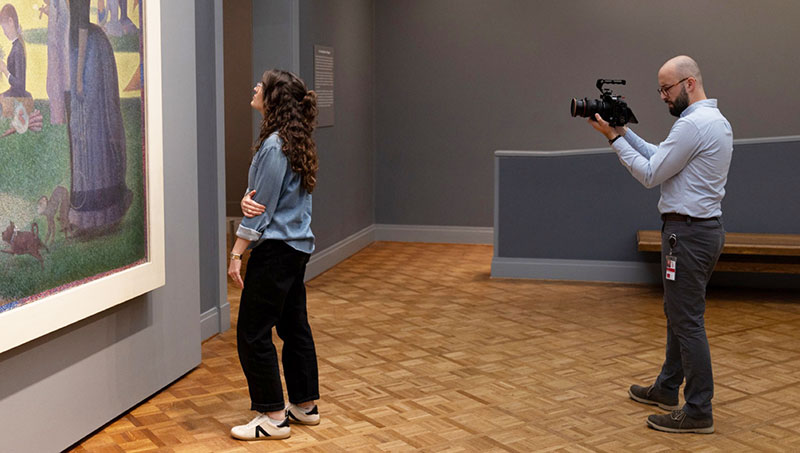
“We use the Mini Panel for natural, hands-on control during grading sessions, helping us work quickly and fine tune the look in a way that feels artistic as well as efficient,” he said. “Having the right tools in place helps us make the most of every storytelling opportunity, elevating artists and their work with content that feels aligned with the quality of the exhibitions themselves.
“This makes a huge difference in how we tell stories and helps us to engage with our visitors in many new ways. It’s exciting to work at a place like the Art Institute where there’s room to experiment and raise the bar for how museums approach video and connect with our audiences.” www.blackmagicdesign.com