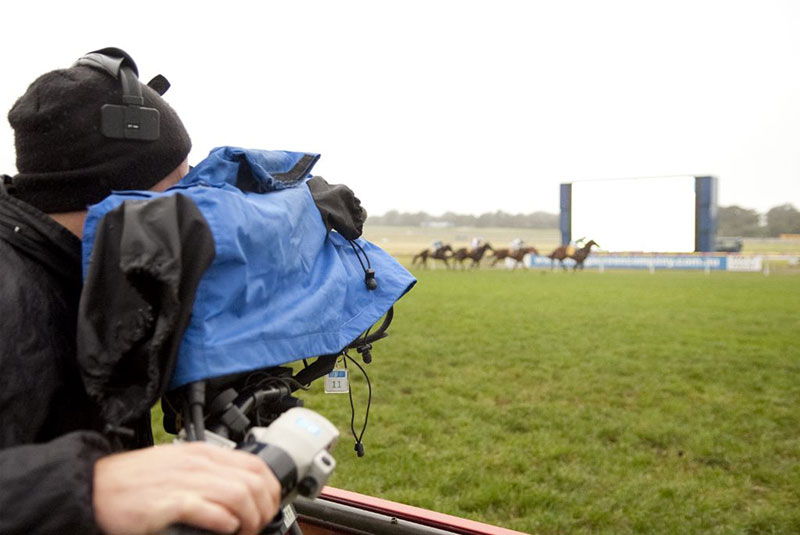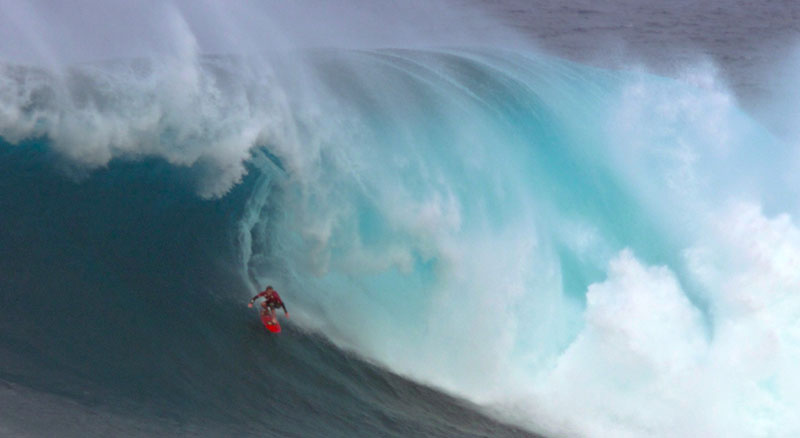


DP Ben Saffer chose the Blackmagic URSA Cine 17K 65 to pull the emotional closeness of 16mm into the physical space of 65mm, keeping viewers inside the story instead of looking at it.
To shoot To Fly or Float, Cinematographer Ben Saffer set out to create a 1970s period look built on layered images and interesting contrast ratios. Producer/writer Olivia Maiden had set the film in the lived experience of childhood grief, leading Ben to draw on visual references from earlier films including Kes, Ratcatcher and Fish Tank to illuminate the story.
“From our first conversations, our director Charlotte Peters, Olivia and I aligned on tone and texture,” said Ben. “Those references shaped everything, from the locations we pursued and the production design palette to how we planned lighting and lensing.”
Instinctive Exposure
With his love for the look of film, he wanted a camera that would let him follow his instincts regarding exposure. “For me, that means something that is naturalistic in the way the colour filters work within the sensor and a setup that lets me focus on the important details in a scene. On To Fly or Float, Charlotte and I chose the Blackmagic Design URSA Cine 17K 65 and built a package around it that helped us achieve layered images with depth, interesting contrast ratios and an emotional closeness that still carries scale.
Part of achieving that layered effect involved always including something bright in the shot to anchor the shadows. We looked for a camera and lens setup that would carry the emotional closeness of handheld 16mm but also translate into the physical space of the 65mm format, encouraging viewers to feel they were inside the moment rather than looking at it.
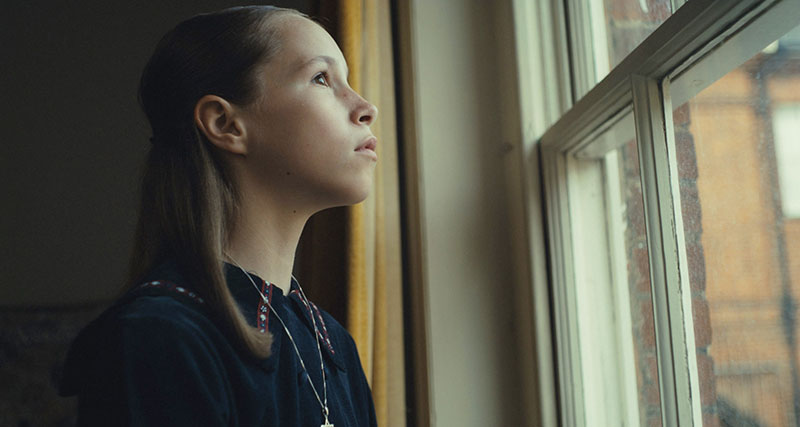
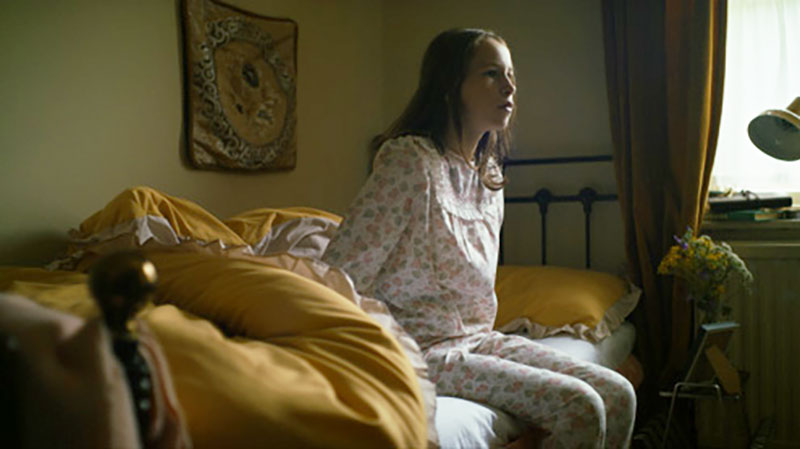
In this scene, the character moves from her known world into the unknown – the split down the middle between brightness and darkness is a deliberate story choice. “Her face has a beautiful shape that the 40mm Cooke Panchro 65/i lens brings to life. A different camera would have called for a different lens and framing. But with the larger 65mm format sensor, you get a particular kind of optical path,” said Ben Saffer, cinematogapher.
“When I first started thinking about shooting on 65mm, the producers agreed it was the perfect format for epic, outdoor landscape cinematography but wondered how well it would work for small indoor spaces. I understood that instinct. But I also think cinematographer Bob Richardson, known for his work with Martin Scorcese, Quentin Tarantino and Oliver Stone, showed what is possible with 65mm for interiors, which gave me more confidence to use the format in a story like this.
Wide Format Lenses and Framing
When selecting lenses and coverage, their plans took the URSA Cine 17K 65’s full sensor coverage into account, using the camera’s 55.91mm image circle and open gate 8K capture to result in a 65mm 5 perf equivalent canvas. That meant we could commit to large format framing and depth from the outset, then build the lens package to suit – two Cooke Panchro 65/i focal lengths (40mm and 75mm) with GeckoCam Opias on either end to go wider and tighter.
Considering how 65mm affected his exterior framing and sense of space, he noted, “What I am always chasing is a format and lens combination that gives me options as the filmmaker, without pushing the audience out of the story. With 65mm, you have another creative option that goes beyond how a DP would normally approach a scene on anamorphic.
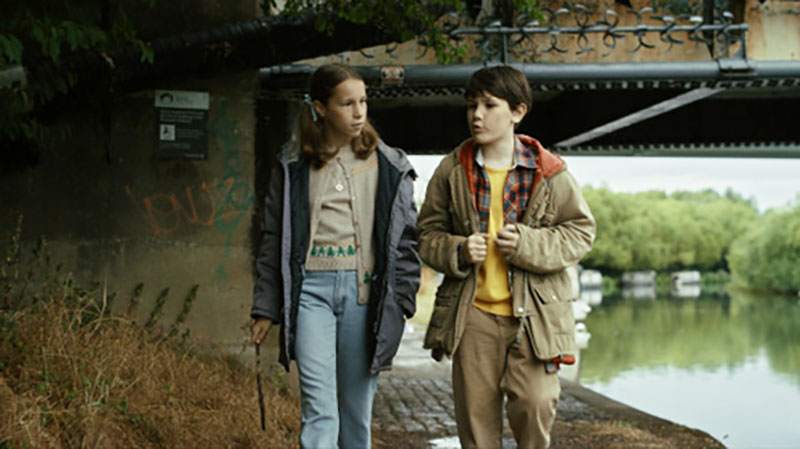
Describing that option, he talked through constructing an exterior scene used in their canal sequence. “We wanted a canal in Birmingham during the 1970s. This was shot using daylight only, but being able to include trees to one side and reflections off the water on the other gave us a bit of everything we wanted.
To get a sense of geography and space, I would normally shoot anamorphic on a 50mm or 60mm lens. But the larger 65mm format allowed us to step back while still getting that same level of compression. Shooting with the URSA Cine 17K 65 meant I could use the spherical 75mm Cooke Panchro 65/i, which is quite a long lens, while retaining a sense of being right there in the moment.
Protecting Intimacy
That left the challenge of protecting intimacy without either intruding or receding into the distance. He said, “That balance matters. With an intimate scene, you do not want to be right in the actor’s face because it can feel as though you are interrupting something. But I also wanted to avoid the voyeuristic or even journalistic feeling of a long zoom.
“Format becomes critical in this situation. If I had shot wider on a smaller format sensor, I would have lost all the compression of the background, making it feel even more distant. The 65mm format gives me another creative option to shooting anamorphic.
Skin tones are a universal concern. Ben commented that the URSA Cine 17K 65 is very clean in the lower range of the skin tones. “You do not mind some luminance noise, revealed as grainy black and white spots in an image, because it can feel like film grain. But you definitely do not want chroma noise, appearing as colourful, sometimes random dots or pixels.
Both types of noise can be distracting and make an image seem unclean. For me, the sign of a good camera is being able to get the best out of the tonal curve of the sensor without having to do too much.
Camera Convergence
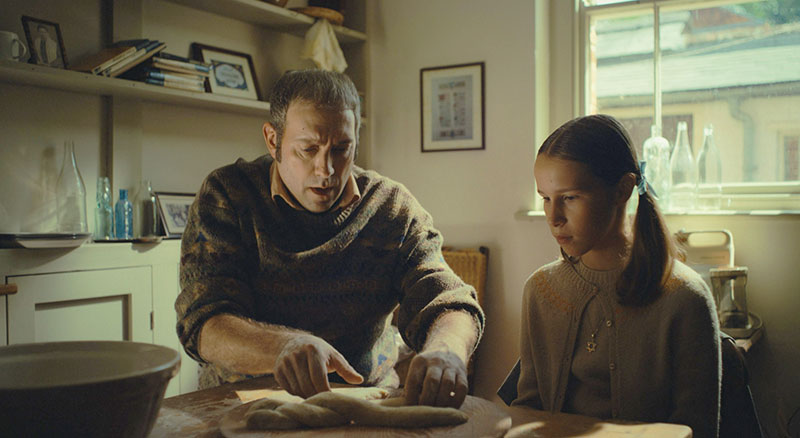
As converging all of these factors and choices – exposure, framing and composition, and colour – is what makes the film, Ben chose a scene in the kitchen as an example of when this worked best on To Fly or Float. “We were in fairly tight spaces for most of this film, so I tried to keep the light as soft as I could. I wanted it to feel single source, naturalistic but still fairly big.
“For the kitchen, I used a Vortex8 with a big 8x8 silk with the light source bouncing down into the silk, almost like a book light, but made very simply. Then we had a hard light coming through the window behind the Uncle. The look we were ultimately able to achieve was always going to be a combination of the way we lit, the colour pipeline and some of the production design choices, but it is also something that comes from shooting in the 65mm format.
“This is an intimate story about a young girl, but I still wanted to give it a sense of scale because, in her life experiences, these were the biggest things that had ever happened, and 65mm certainly gives you that sense of importance.” www.blackmagicdesign.com