

National Archives of Estonia completed a video digitisation project preserving 4,300 hours of historic footage held on ageing magnetic tape, with AV preservation specialist Memnon.
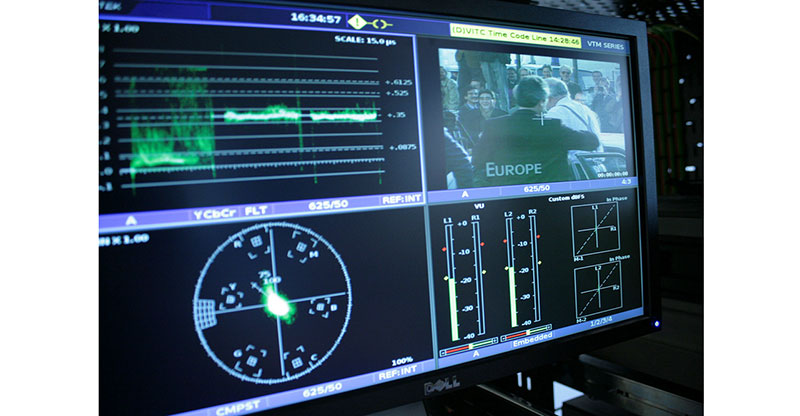
Ageing magnetic tapes across Europe are approaching the end of their usable life. Legacy video formats rapidly degrade and, because no new projects are produced using them, the equipment needed to play them is disappearing as well. Industry experts warn archives, broadcasters and media organisations across Europe that without urgent intervention, significant volumes of audiovisual heritage could be lost within only years.
Feeling the pressure of this warning, and aware that time was passing, the National Archives of Estonia has undertaken and completed a large-scale video digitisation project, preserving 4,300 hours of historic footage. Because they needed Memnon to address the problem rapidly and at scale, the project was delivered in partnership with Memnon, an audiovisual preservation specialist, successfully digitising over 1,300 tapes, including parliamentary sessions and key political and cultural records.
An Urgent Undertaking
As well as its specialised staff and equipment, which includes climate-controlled transport for sensitive materials, NAE selected Memnon due to its experience with European archives. The CEO of Memnon Heidi Shakespeare said, "Right away, from the start, we understood the significance and urgency of this project. The National Archives of Estonia trusted us with historically important materials, recordings that open a window into the country's rich history.
“We deployed the right resources and expertise to meet the project deadline while also delivering the quality of care these materials required. Preserving the recordings for future generations was a priority we didn't take lightly."
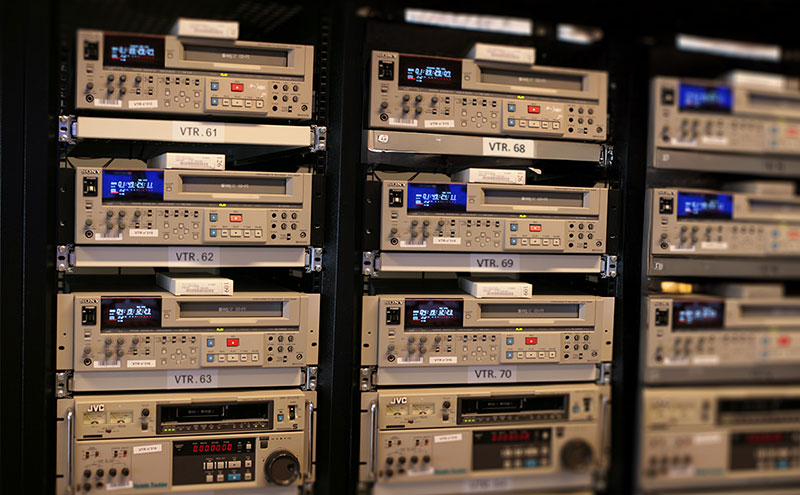
Denis Mahé, who is Global Head of Production Systems at Memnon, also said, “Even in the early stages, NAE was able to trust Memnon with their historically and culturally sensitive and valuable archive. This was the first time that NAE would let their physical archive out of Estonia, and it was Memnon's experience and success in projects of this kind with other European institutions that helped them make their decision.”
Inherently Unstable
He identified what causes magnetic video tape to degrade so quickly, compared to other formats. “Generally, it's because the materials used in its construction are inherently unstable, especially over the longer term. Magnetic tape is not just plastic with metal on it – it's a layered structure, usually comprised of polyester, a binder or polymer glue, and magnetic particles such as iron oxide or chromium dioxide.
“The binder is the weak link and is subject to hydrolysis, which can cause stickiness, flaking/shedding and head clogs. It is extremely sensitive to heat, humidity, mould, dust and even magnetic fields! VHS in particular was always more of a 'consumer' product which may also have been a factor affecting quality.
Memnon carried out a number of different preservation services to complete the project within a strict eight-month schedule. The skills of Memnon’s in-house team of engineers, operators and developers mean they can customise solutions to handle complex or unusual media restoration issues, ranging from oxidation and physical damage to mould and dirt contamination.
Regarding the client's eight-month schedule, Denis noted that, in fact, they have the capacity to work even more quickly and adapt to tighter schedules. He said, “We were able to adapt our production to suit the NAE's timeframe request by controlling the throughput and allowing them the necessary time on their side to check the delivered files.”
Beating the Clock – Digitisation
The team’s first step was to digitise the video tapes before they degraded beyond repair. The tapes dated back to 1999, representing invaluable pieces of Estonia’s cultural heritage including parliamentary session recordings and materials documenting the country's history.
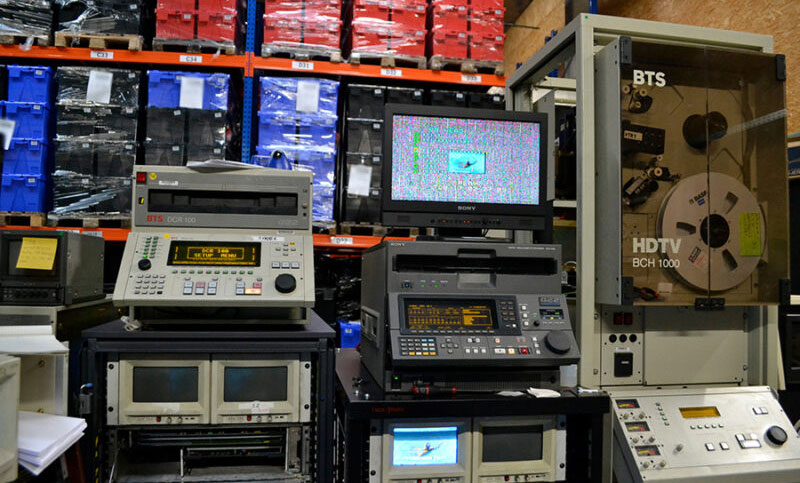
Denis talked through the steps involved in their digitisation process. “Before digitisation could begin, we needed to check In and barcode all tapes, identifying each one with a unique barcode,” he said. “Doing this makes it easier to track and identify the files as they are generated and go through the different stages of the workflow, until a final output file is ready for delivery to a client. For this project, we had to apply new barcodes that are readable by our players.”
Before a tape is loaded into a player, the barcode on the tape is scanned, as well as the barcode on the player. The proprietary Memnon Ingest solution is launched, and the tape is digitised based on the specifications of the client.
“For NAE, we applied a full tape ingest, meaning we record all content, present or not, based on the physical duration of the tape,” said Denis. “During the digitisation, the operator manning the setup inputs comments where necessary, based on what is seen during the digitisation process, as there is a screen with audio output for monitoring purposes.”
“Once a tape is digitised, it is saved and moves to the next stages of the workflow, which involve an analysis and quality control on the file generated, before finally making it available for delivery to NAE as an output.
Availability First
Denis emphasised that, at is core, the preservation approach is about transferring content into a digital format in order to, first, future-proof the archive and, second, eliminate reliance on increasingly obsolete playback technologies and the specialised skills required to operate and maintain them.
“More important, digitisation is what enables the content to become available at all,” he said. “Until material is digitised, it is, for all practical purposes, inaccessible, and cannot be experienced, learned from or meaningfully engaged with by contemporary or future audiences. Digitisation unlocks the full present and future value of the content.
“Advances in technology have made content more valuable than ever, not only from a commercial perspective but also in terms of preserving cultural heritage, supporting education and research, and ensuring that historically significant material can continue to be discovered, interpreted and understood over time. In this sense, digitisation is not simply a technical preservation exercise – it is the essential foundation that allows the content’s cultural, historical, and societal value to endure.”
Avoiding Loss from Frame to Frame
About the factors determining what the new format for a piece of video should be, Denis said, “Some institutions have their own specifications for those decisions, but in general we consider FFV1 for archive preservation, and IMX50 (which uses MPEG-2 encoding) or ProRes 422 for broadcast clients that may want to use their archive for repurposing/licensing.”
“The choice is about preservation but also public access, rather than licensing. In NAE’s case, there was a need to preserve the content away from the VHS format, but the institution is also obliged to make the parliamentary sessions available to the public.”
FFV1 is a lossless intra-frame video codec from the FFmpeg project that limits redundant data within the frames. Its design considers the storage of image characteristics and data fixity, and tries to optimise encoding time and storage requirements, supporting lossless video applications such as long-term AV preservation and other video encoding work that aims to avoid generational loss.
Partnership
"Partnering with Memnon produced smooth, scarcely visible results. Their team’s professionalism and the care they showed for our heritage made a real difference," Eva Näripea, Director of Film Archive, The National Archives of Estonia, said. "They consistently went the extra mile, ensuring flexibility and responsiveness throughout. As Estonia's central memory institution, we needed a partner we could trust completely for our first major video digitization project. Memnon gave us confidence that our valuable assets were in the right hands."
The digitised content is now publicly accessible online as NAE takes its position among the leading cultural and historical institution in the Nordic and Baltic region.
The successful completion of this project demonstrates the value of specialist digitisation expertise for national memory institutions facing the urgent challenge of preserving legacy audiovisual collections before they degrade and are forever lost. memnon.com