
Katana 9.0’s native USD support gives lighting artists flexibility and control over lighting in USD workflows for scenes of any size, while maintaining data integrity all along the pipeline.
Foundry Katana 9.0 look development and 3D lighting software focusses on ease of integration and scalability. Because it includes native support for Universal Scene Description (USD), lighting artists can gain flexibility and control over lighting in USD workflows. Users, or teams of users, can work with scenes of any size while maintaining data integrity all along the pipeline.
"At a time when studios and artists are expected to deliver higher quality and complexity with less budget and time, USD workflows remain integral to those goals. The features in Katana 9.0, including UsdSuperLayer, marks the next evolution in our native USD journey and allows artists extreme scalability without having to compromise on quality," said Steven Shapiro, Senior Director of Product & Engineering – Katana, Mari and Flix, Foundry.
Efficient, Flexible UsdSuperLayer
Katana has a new framework in version 9.0 for creating and editing prims by generating a single USD layer, the UsdSuperlayer, instead of outputting a layer per node, contrasting with typical node-based USD workflows. Scene management within the UsdSuperLayer is handled through a flexible, straightforward interface used to add, modify and edit any element from the stage. It treats USD as the source of truth for all properties appearing as UI elements. Direct edits are supported via Katana's Python API.
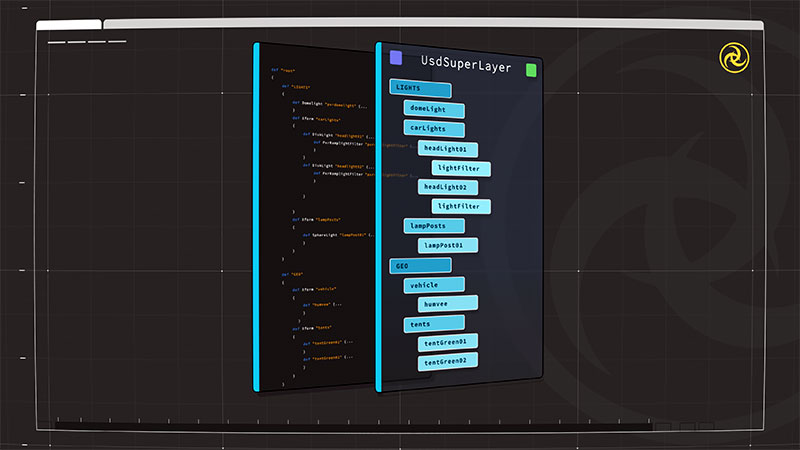
With only the one layer, this approach removes heavy additional computational steps that may compromise performance, especially when working at scale. Also, because it operates through a plugin system in which users incorporate proceduralism if and when they need it, the UsdSuperLayer can help increase speed and scalability.
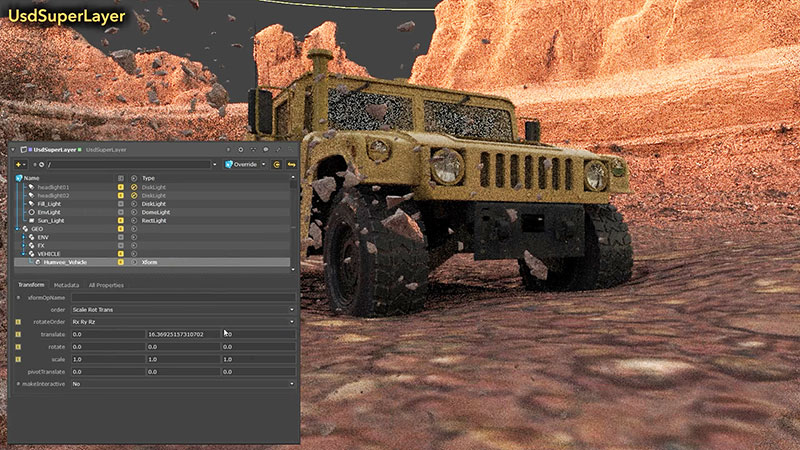
It is preloaded with a set of prims – the fundamental elements making up a scene – but it can also create and edit any USD prim on a scene stage. A team can use Python to customise the interface and build tools to suit their particular needs.
When USD scene data is brought into Katana, the prim parameters may be accessed from inside the UsdSuperLayer to make changes to the scene. Exporting these edits then pushes them back up the pipeline, using the straight USD data without applying custom schemas so that the data remains universal.
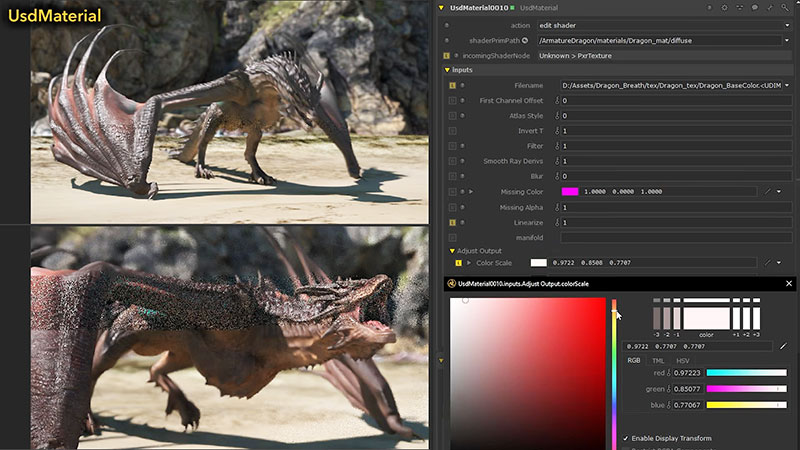
Bringing USD into lookdev workflows allows users to create new materials, edit individual shaders or access material interfaces from materials in the lighting scene. The ability to tweak materials at a sequence level or in individual shots means artists keep full control.
Specialised Node – UsdGaffer
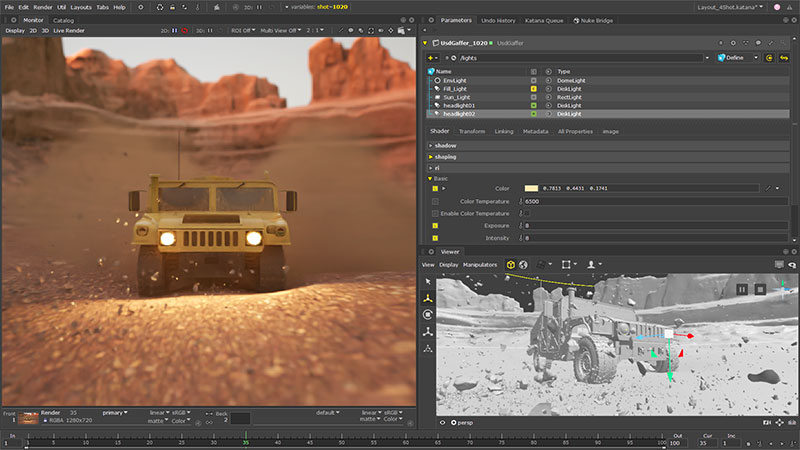
UsdGaffer is Katana's first specialised node based on the UsdSuperLayer, and utilises all of its functionality while adding adjustments to cater for lighting requirements. With flexibility and full control over the lighting of their entire USD stage, artists can create and modify lights, or adopt them from upstream.
Only the changes made on the UsdGaffer node are stored within the underlying node's layer, making it lightweight and easier to manage. This feature gives artists the transparency and clarity to work collaboratively, and to work across large setups. The inheritance features also allow users to layer their work, as they can with traditional multishot setups using Katana's existing features.
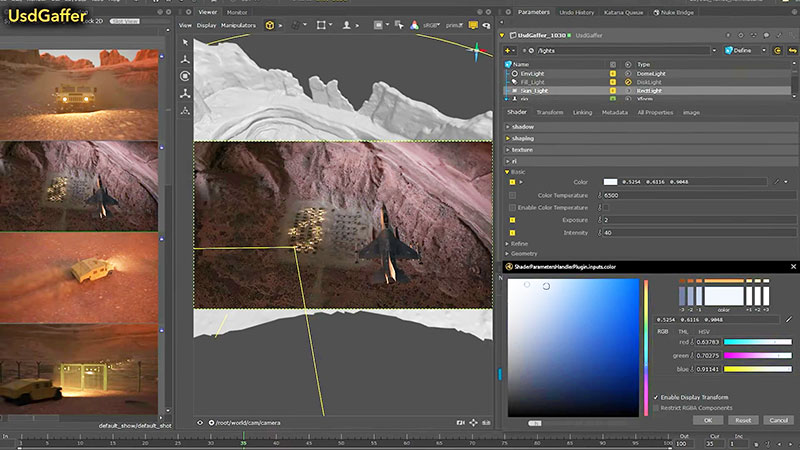
Used to efficiently create and edit unlimited lights all in one USD layer, UsdGaffer has an updated UI for adding lights, adjusting parameters, light visibility, showing upstream lights and syncing selections to the viewer. Artists can set up lighting right across a sequence, inherit the scene and make overrides for individual shots, while keeping track of changes.
New UsdMaterial, Hydra 2.0 Support
Beyond the UsdSuperLayer devlopments, Katana 9.0 has a new UsdMaterial node, a lightweight method of creating single-shader materials, or making quick edits on incoming USD looks or looks converted via KatanaToUsd workflows.
Also new in Katana 9.0 is support for Hydra 2.0 (in alpha) as another step toward standardisation, and serving as a framework for both USD and Geolib rendering in a new Hydra 2.0 Viewer. In the tab for this viewer, artists can preview how Katana and USD scenes would look when rendered with their preferred Hydra 2.0-compatible renderer. (Hydra brings flexibility to use any renderer, whether traditionally supported or not.) Along with previewing, users can examine the scenes with the Hydra Scene Browser
Katana 9.0 is available to download now for users with active subscriptions. www.foundry.com