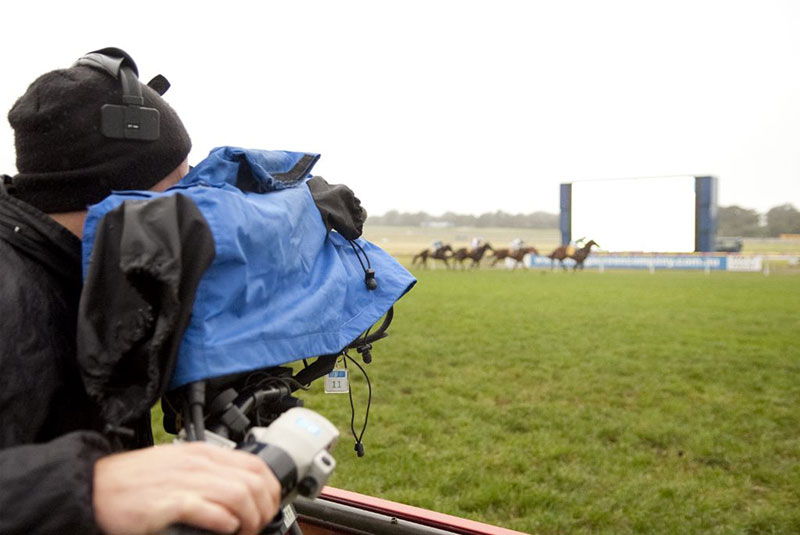


A portable transmission system at Oceania Football Confederation using LiveU for connectivity brings remote broadcast-quality VAR to six Pacific island nations with 1 sec round-trip latency.
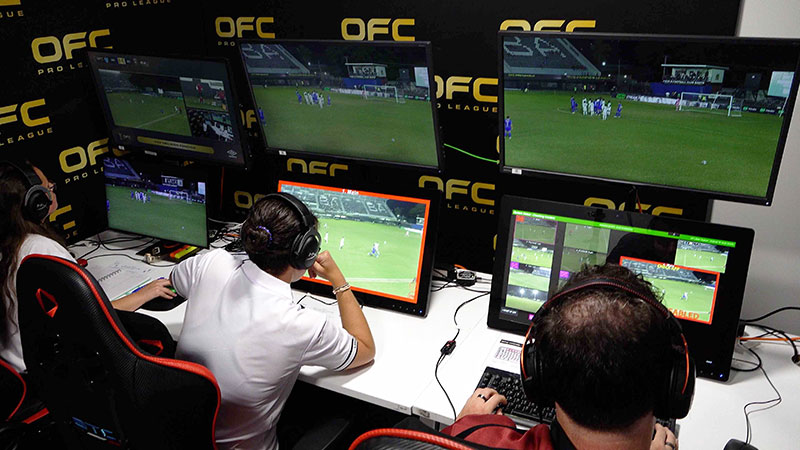
LiveU has been working with the Oceania Football Confederation (OFC) to introduce Video Assistant Refereeing (VAR) to the Pacific Islands.
For some years, the OFC had been the only FIFA confederation operating without VAR – an issue that had arisen from very practical reasons. Standard broadcast equipment freighted across the region faced repeated customs delays and damage at island ports, and high-capacity fibre is unavailable across the Confederation’s 13 island nations, which include Fiji, Papua New Guinea, Solomon Islands, Samoa and Tahiti.
Technology, People and Accessibility
The general conclusion was that any fixed-infrastructure approach would be unworkable. But when VAR was mandated for the OFC's newly launched Pro League – spanning eight teams from six countries – the potential for a remote VAR system using LiveU for connectivity was explored.
"We were the only confederation in the world without VAR, and we knew that if we relied on traditional models, it would never happen for us," said Kevin Stoltenkamp, OFC Head of Refereeing. "For us, accessibility is everything. The solution wouldn’t be based purely on technology but also on people working on the problem together.
“When I finally saw it running for the first time, I realised – this can work. We can now take the system as baggage on a plane and deliver VAR anywhere."
Remote Transmission for Hawk-Eye VAR
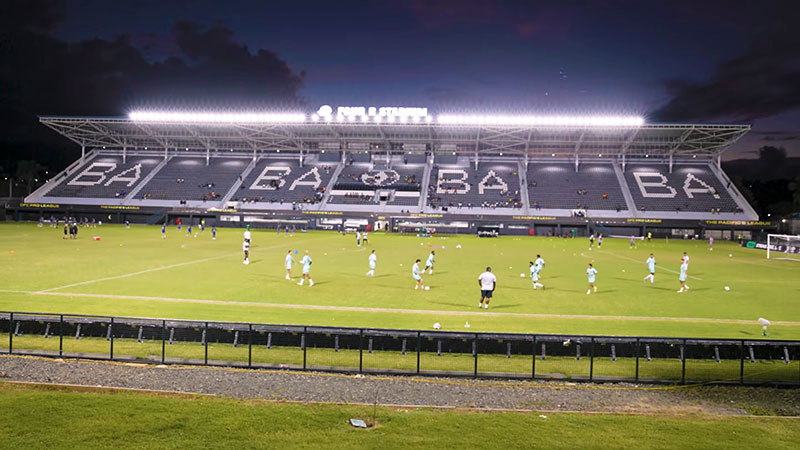
Working alongside the OFC's refereeing and technology teams, LiveU’s response to the challenge was to design and build a complete, remote integration system to support their Hawk-Eye VAR platform. It comprised of two portable transmission kits and a centralised receiving server in the Auckland hub at the OFC Academy, supporting up to 12 simultaneous camera feeds with four return feeds carrying integrated two-way referee communications back to the field.
Integrated dual intercom functionality means field crews can see current program feeds and/or receive communications from the hub during matchess. The dual Video Return delivers both feeds directly to the team via uninterrupted communication channels, allowing them to maintain coordination during dynamic football matches.
OFC Referee Technology Lead Kelvin Lewis said, “LiveU maximised the internet capabilities of each country so that we could deliver high-quality video back to the video operations room with out facing a large cost for internet that wouldn’t be feasible for the project. As a result, our solution is a bit of a hybrid between traditional broadcast and VAR.
“We have the broadcaster at the stadium. We have LiveU units that are compressing the signal and sending it through to a receiver at the OFC Academy where the video operations room is. Then it uncompresses the signal, puts it into our VAR server and makes it available to our video match officials – and this is all happening within the blink of an eye.”
Built to Travel
The entire system maintains approximately one second of round-trip latency between remote Pacific venues and the Auckland hub, meeting FIFA's professional standards at a cost that is markedly lower than fixed-infrastructure deployments of a similar size and scope.
Each LiveU transmission kit was engineered specifically for travel and designed to pass through check-in as standard baggage. Each component was individually adjusted for weight to stay within airline limits, and the kits require no freight, permanent infrastructure or specialist engineers on the ground. Equally important, they can be deployed by a single operator over managed internet connections.
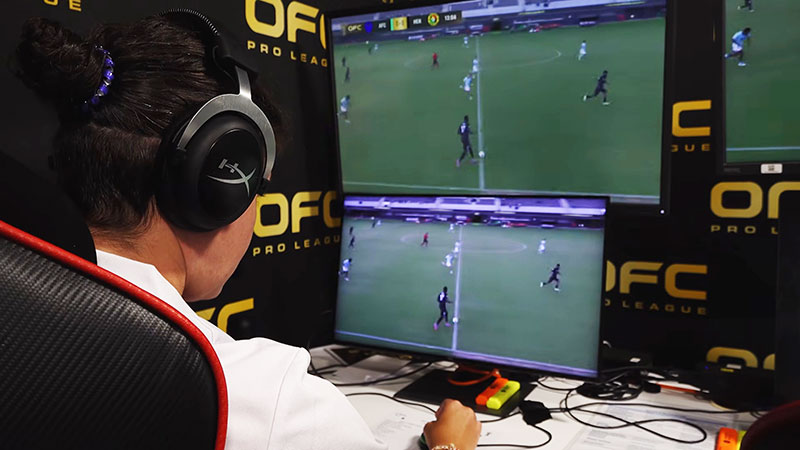
"We needed something lightweight, portable and capable of delivering multiple camera feeds with audio – without relying on freight," said Kelvin. "Within a very short time, we realised we could transmit broadcast-quality signals across even highly challenging networks. What we've built is a low-cost, high-quality VAR system that we believe is unique in world football. We went from manually editing clips on a hill to delivering full VAR capability – that's the scale of change."
Independently Owned and Operated
Another goal was designing a VAR that local Pacific Island technicians could own and operate independently. "The system is simple to use – you don't need to be highly technical to operate it," said Mihaly Fabian, OFC VAR Project Manager. "LiveU is the basis of the system and is essential to making this work."
The OFC evaluated several equipment suppliers before selecting LiveU – ultimately choosing it because the solution could be built on LiveU's existing platform rather than a custom build, saving time and complexity. The system achieved a 100% success rate across proof-of-concept deployments, with issues diagnosed and resolved remotely from Auckland without the need for engineers on the ground at Pacific Island venues.
The deployment has now expanded beyond the OFC Pro League and was deployed for the New Zealand Football FIFA Series and OFC's Women's World Cup qualifying semifinals in Hamilton and final in Auckland, a FIFA-sanctioned competition. The next deployment takes the system to Tahiti. www.liveu.tv