

Steve Reynolds, CEO at Imagine Communications, looks at trends he sees on the way for the broadcast industry in 2026, from a rapid shift toward consolidation to unified origination to AI.
Steve Reynolds, CEO at Imagine Communications, looks at five trends he sees on the horizon for the broadcast industry in the coming year. From an accelerated shift toward consolidation to unified origination and AI, changes are on the way.
Industry consolidation becomes a defining force in 2026
The accelerated shift toward consolidation is driven by necessity. It’s happening against a backdrop of shifting business models, regulatory uncertainty and continued audience migration across platforms. Companies are seeking stability, and that stability comes from scale. Networks, streamers, rights owners and ad sellers are all working to build more efficient, more resilient operations as costs rise and platforms fragment.
Across the industry, tech vendors are similarly building scale – expanding both the breadth and depth of their capabilities. End-to-end workflow integration is becoming a requirement, as customers expect tighter alignment between playout, multiviewing and related functions. This shift has accelerated consolidation among vendors.
Investment is also flowing into mission-critical systems that support the full advertising and operations lifecycle, from inventory creation and sales to execution, reconciliation and billing. These additions are designed to support impression-based, addressable, streaming and FAST models.
Total TV gains global traction
Total TV – a converged monetisation model where audiences, not platforms, drive how media is sold, delivered and measured – is becoming a necessity as we head into 2026. Yet for all the industry discussion, true implementation remains rare.
Many operators claim to be achieving Total TV while still splitting orders by platform. But if they’re selling individual linear spots, they’re not doing Total TV. A real model starts with the audience as the inventory and delivers that audience wherever they choose to watch.
When executed properly, Total TV enables simultaneous audience delivery across linear, streaming and time-shifted environments. In some markets, buyers are often surprised this is even possible in a unified framework. However, Australia is ahead of the game, with Total TV principles already embedded in some operators’ trading models.

Steve Reynolds, CEO at Imagine Communications
The adoption rate of Total TV will continue to increase as major events and tentpoles will make the benefits even more visible, highlighting the efficiency gained when operators stop treating linear and streaming as separate silos. Moreover, buyer calls for simpler transactions and outcomes-based measurement – areas where digital platforms currently excel – are accelerating Total TV urgency, as broadcasters work hard to correct this imbalance through 2026 and beyond.
Unified origination moves from aspiration to reality
The industry is also shifting toward a single operating model that brings playout and streaming together, rather than treating them as separate domains. Early attempts at unification relied on complex aggregations of systems built for single-site or platform-specific operations. When operators tried to extend those architectures, their limitations surfaced quickly. Those efforts clarified what true unification requires: multisite orchestration, flexible automation, consistent metadata and an infrastructure built for linear and digital delivery from the outset.
Today, those requirements are well understood, and the industry finally has the technical foundation to support them. Multiple operators around the world are already running these newer generation, unified environments, proving the model works in practice. What will accelerate adoption in 2026 is that the efficiency gains are now both necessary and proven. Many large organizations that still operate in silos now understand the cost of that fragmentation. Until recently, they lacked a viable path forward. That path now exists, and the business case for taking it has never been clearer.
AI becomes a business driver
Industry conversations around AI that once focused on prototypes and demos are now turning to measurable business outcomes. In 2026, adoption will accelerate because AI is finally delivering clear operational, financial and efficiency gains.
The strongest early impact is in automation. Years of moving toward software-based workflows created the foundation, and AI is now pushing those systems further – taking on tasks that once required large teams and doing them faster, more consistently and at far greater scale.
Video QC is the clearest example. What once required real-time human review has become a pattern-recognition problem, thanks to IP and ST 2110. AI-driven QC evaluates content far more quickly and with far greater repeatability than manual methods.
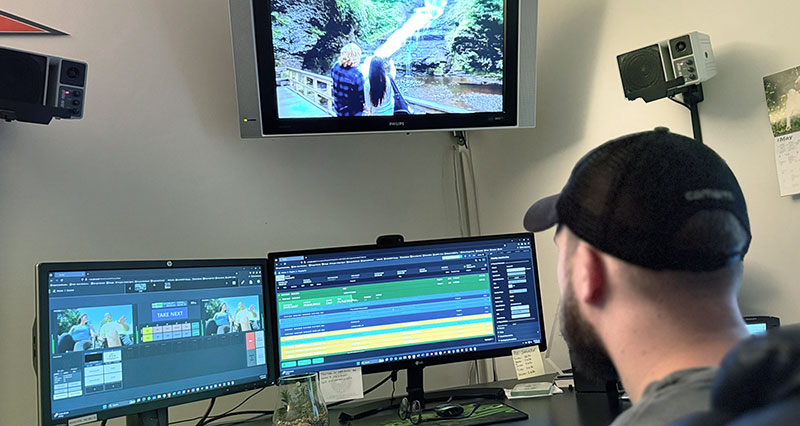
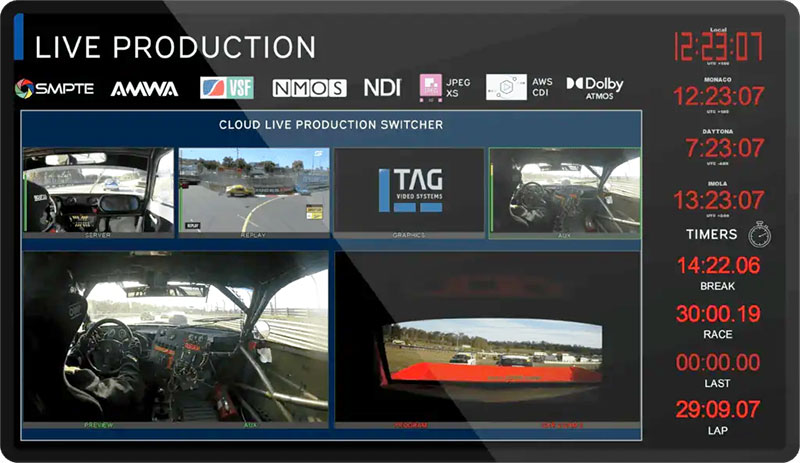
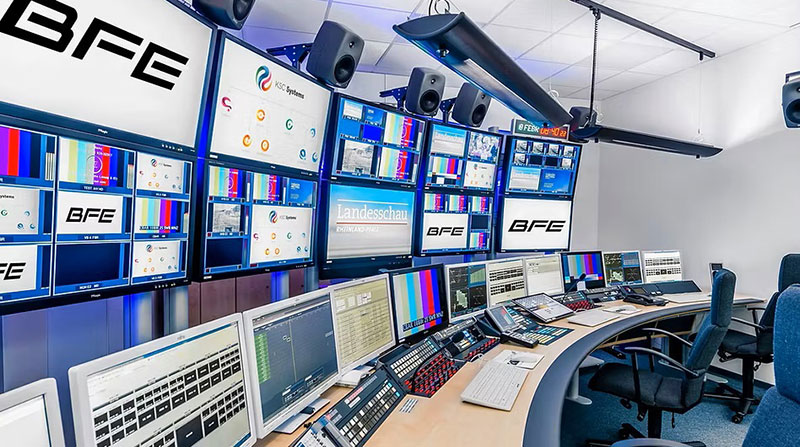
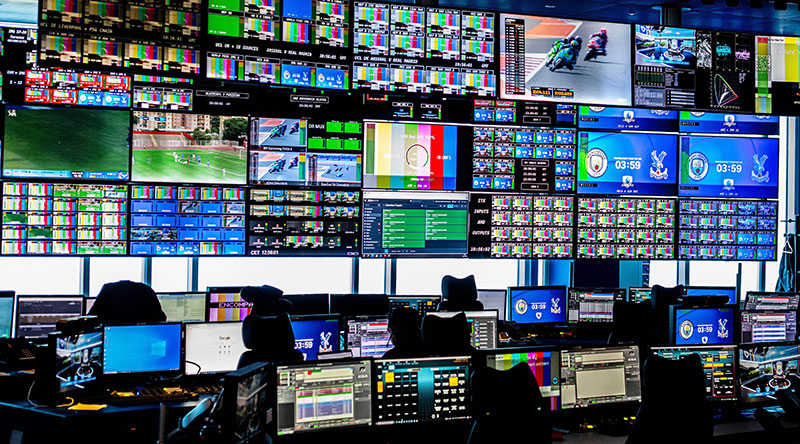
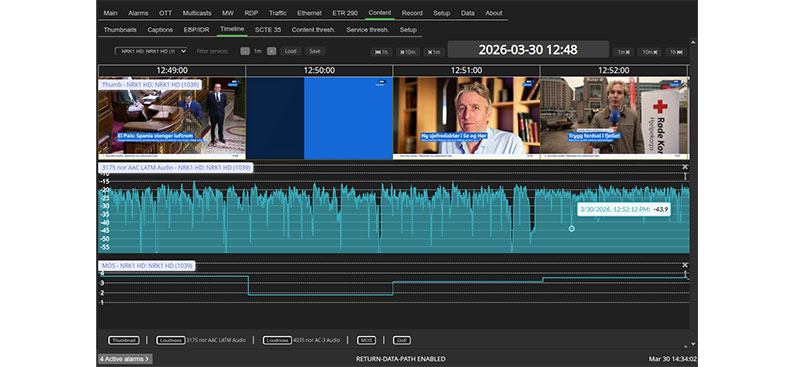
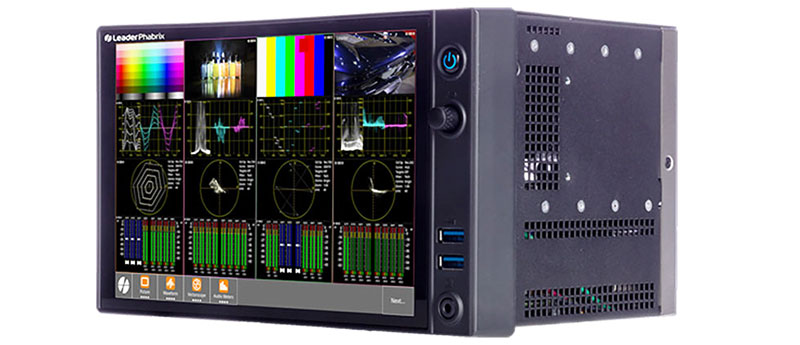
Monitoring and multiviewing are following the same trajectory. AI can analyse hundreds of feeds simultaneously, surfacing the ones that require attention so operators can focus on decision-making rather than watching screens. It’s a true human–AI hybrid workflow.
AI is also becoming valuable in ad-tech planning and optimization. Planning is fundamentally pattern-matching – aligning viewership, content, context and inventory. AI can generate first-pass schedules and scenarios at speed, while humans apply editorial judgment.
Migration to IP is no longer a debate. It’s the clear direction of the industry
ST 2110-based infrastructures are now mainstream across broadcast, production and playout. Broadcasters are actively evaluating hybrid and full-IP workflows as part of future-proofing, and 2026 is the year many of those evaluations will become real transitions.
Several forces are accelerating the shift. The cost of IP switches and networking equipment continues to fall. More engineers now have strong IT and networking skill sets, making IP environments easier to support. Furthermore, IP enables remote, distributed and cloud-hybrid production models that SDI cannot match. SDI silos are becoming harder and more expensive to maintain, and the industry recognises it.
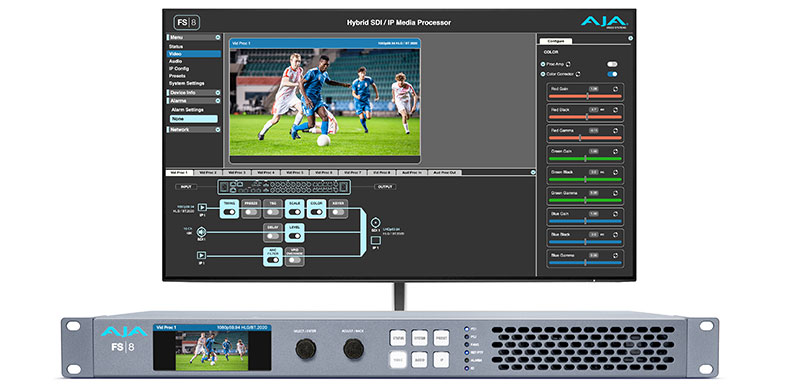
In practice, moving to IP means shifting more workflows onto packet-based infrastructures like ST 2110, enabling multisite and multiplatform production, and giving operators the flexibility to distribute resources across locations. Hybrid SDI/IP architectures are an important transitional phase for many projects, but the long-term direction is unmistakable. Each year, more workflows migrate to IP and fewer stay tied to dedicated SDI islands.
What makes 2026 pivotal is the transition from pilot projects to full-scale adoption. Broadcasters are no longer asking whether IP works – they’re asking how quickly and cost-effectively they can complete the migration. IP is now central to unified, software-defined workflows, and delaying the move only increases long-term costs and competitive risk. imaginecommunications.com